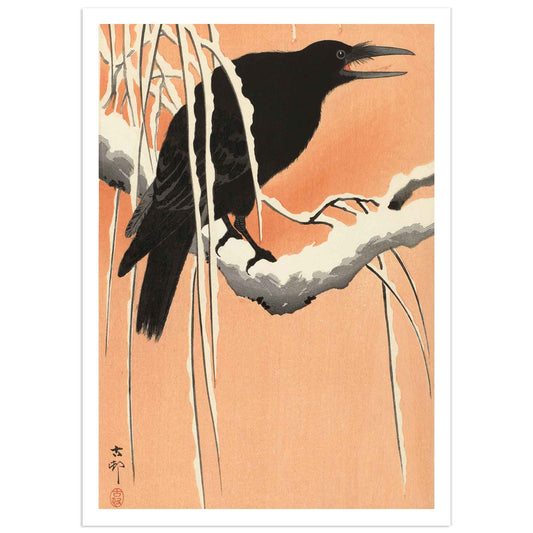
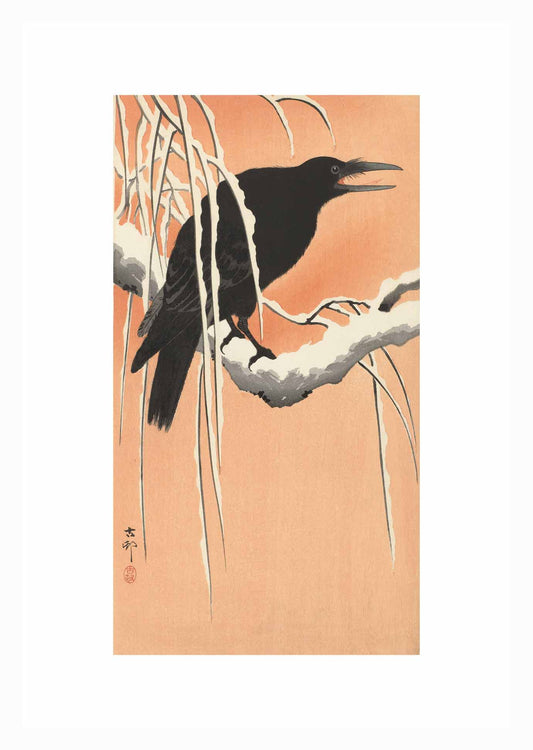
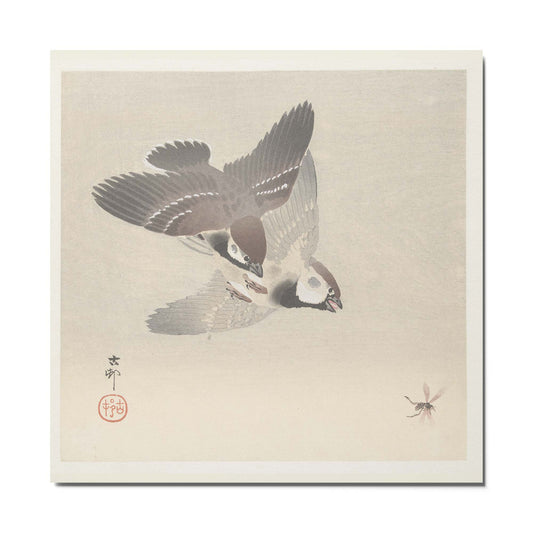
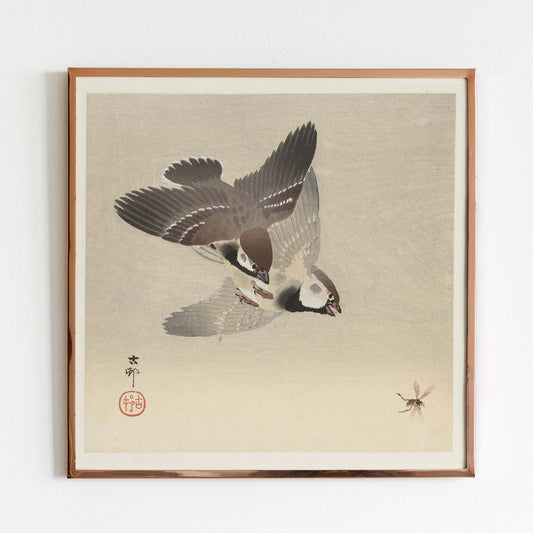
Ohara Koson — Master of Japanese Bird and Flower Prints
Ohara Koson (1877–1945), also known as Shōson and Hoson, was one of the central figures of the Shin-hanga movement — a 20th-century revival of Japanese woodblock printmaking that fused classical Eastern aesthetics with Western artistic influences.
Born in Kanazawa as Matao Ohara, he trained under Shijo school master Kason before settling in Tokyo. His encounter with American collector Ernest Fenollosa proved pivotal: Fenollosa championed his work internationally, opening the American and European markets to Koson's art. His prints were soon distributed by prestigious publishers including Kokkeido, Daikokuya, and later Shōzaburō Watanabe.
A Career in Three Signatures
Koson's biography is inseparable from the signatures he used across three distinct periods — a detail that fascinates collectors and complicates dating:
- Koson (1900–1912) — his early print phase, raw and expressive
- Shōson (1912–1926) — a pause devoted to painting
- Hoson (1926–1945) — a refined return to printmaking, widely considered his most accomplished period
Shin-hanga : Tradition Reimagined
Shin-hanga ("new prints") was not a break from tradition but a conscious renewal of it. Artists like Koson, working alongside progressive publishers, reintroduced woodblock printing to modern audiences by incorporating subtle Western techniques — atmospheric light, tonal depth, Western-style naturalism — while preserving the hand-carved woodblock process and the collaborative relationship between artist, carver, and printer.
Kacho-e : Birds, Flowers, and the Art of Observation
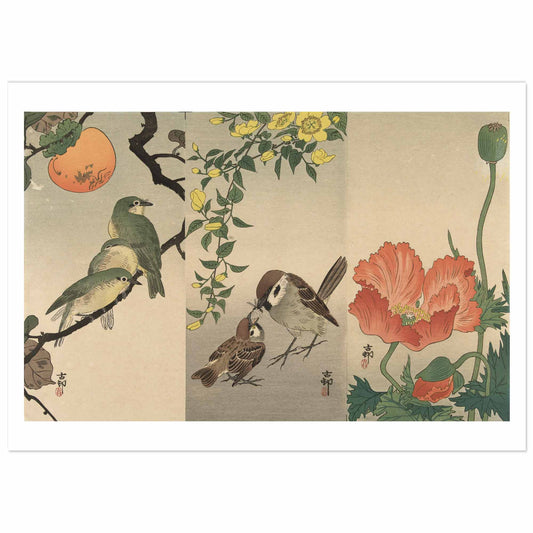
Koson's signature genre was kacho-e — literally "bird-and-flower pictures" — a classical Japanese format he elevated with modern sensitivity and extraordinary technical refinement.
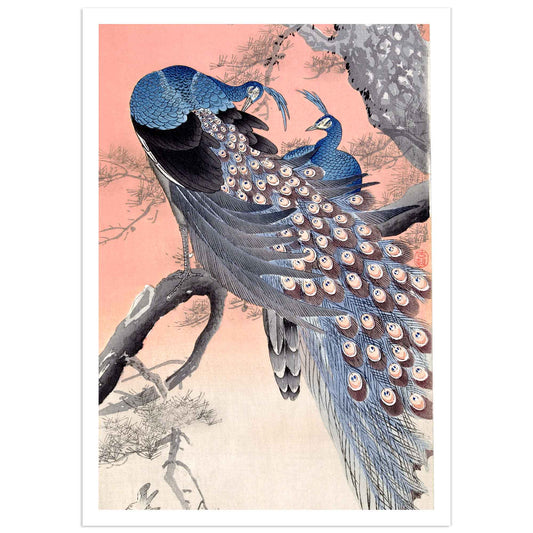
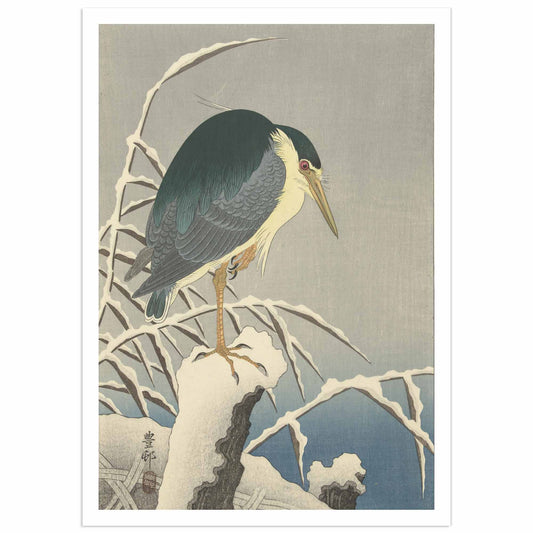
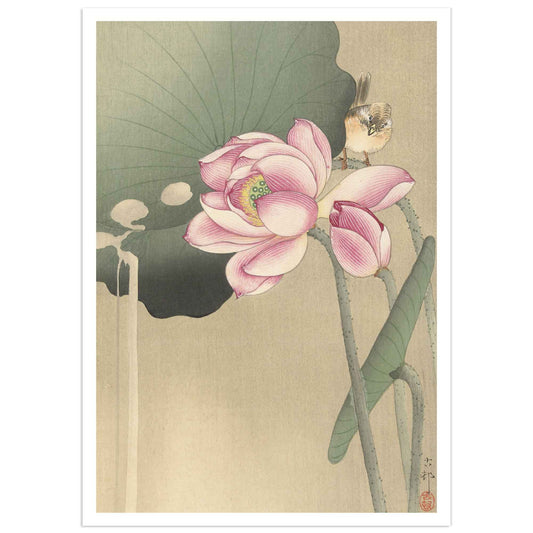
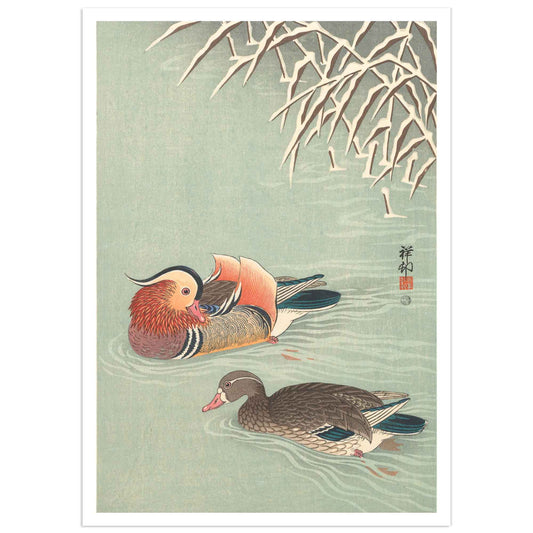
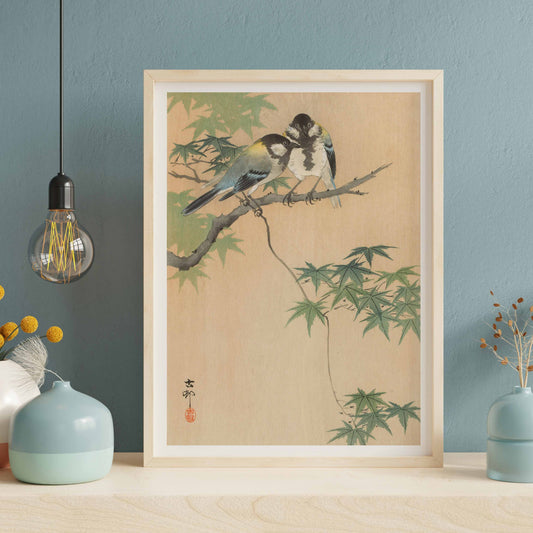
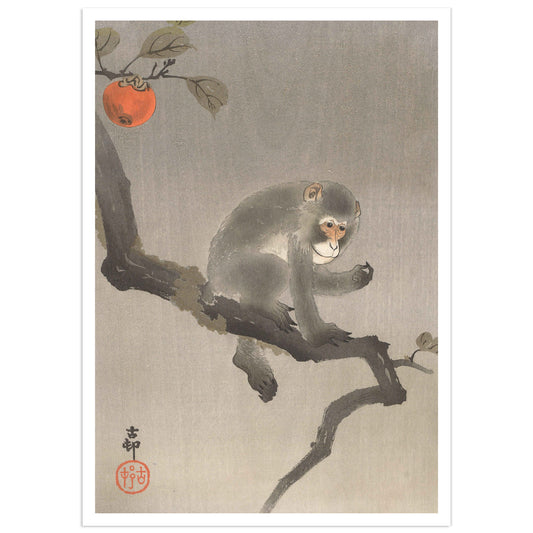
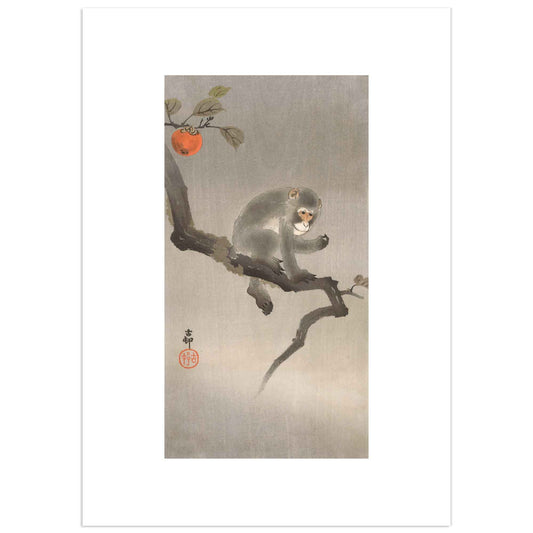
His compositions are instantly recognizable: muted, harmonious color palettes, elongated vertical formats, and an almost scientific attention to the natural world. Herons stand in winter snow. Peacocks rest on ancient branches. Lotuses open at dawn. Each work is an act of patient observation rendered in ink and pigment.
Unlike many contemporaries, Koson rarely painted human figures. His universe was entirely natural — and entirely his own.
Emblematic Works
A few prints stand as landmarks of his output:
- Egret in the Rain — one of his most technically demanding works. The bird is rendered against a deep black background using karazuri, an embossing technique that creates subtle relief by pressing an uninked woodblock into the paper.
- Egrets in Snow — a masterclass in negative space and muted winter tones.
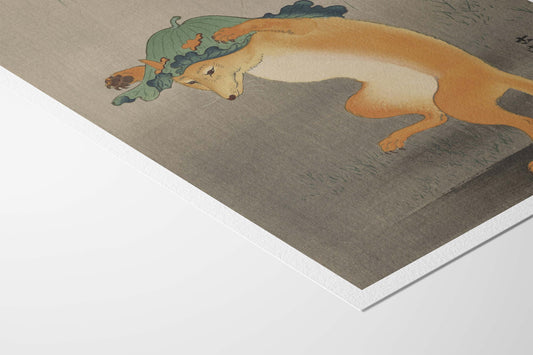
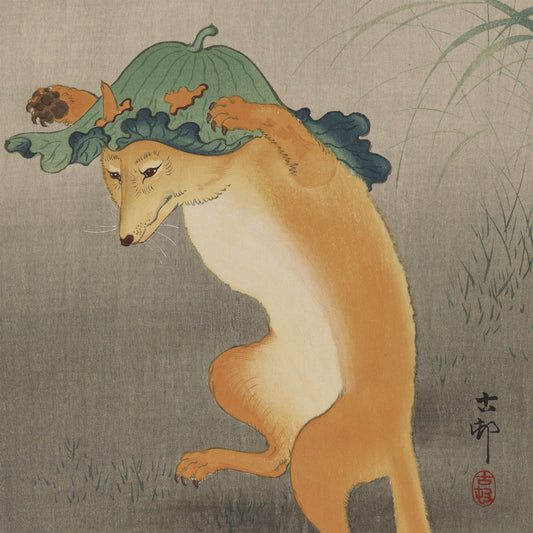
- Dancing Fox — a rare departure into folklore and movement.
- Bees and Hydrangea — a miniaturist study of summer, delicate and precise.
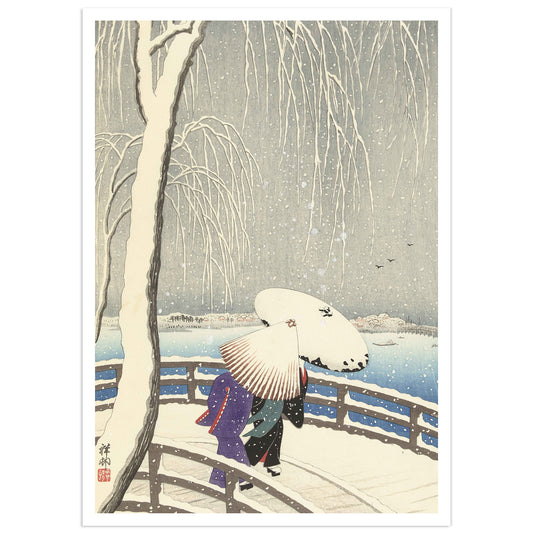
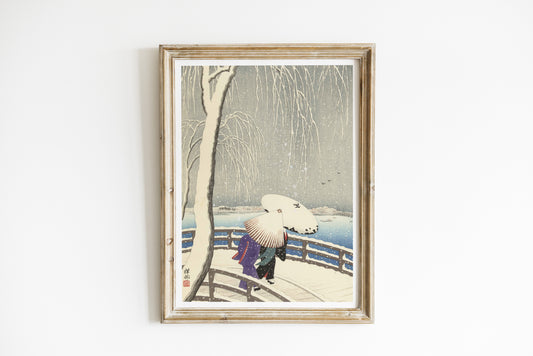
- Two Women in the Snow — one of his few figurative works, suffused with quiet melancholy.
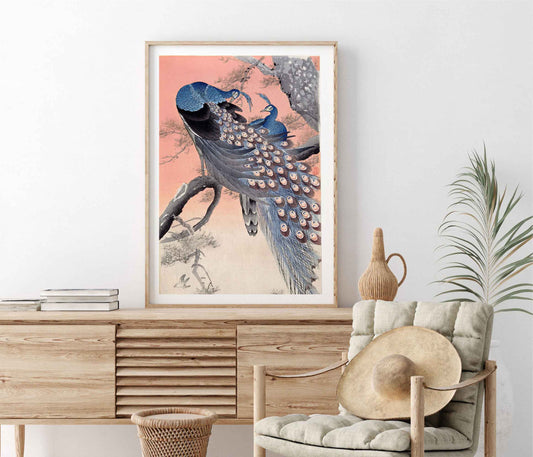
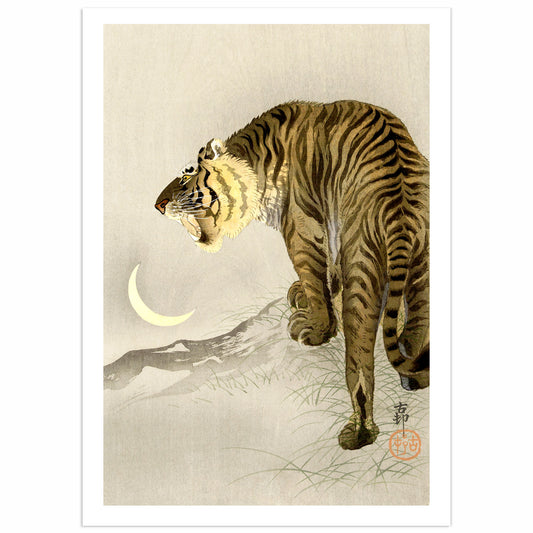
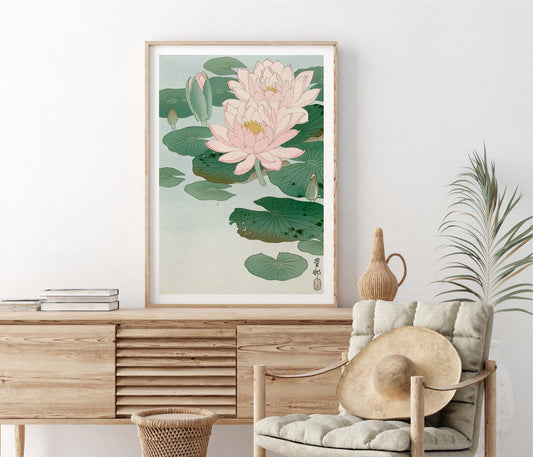
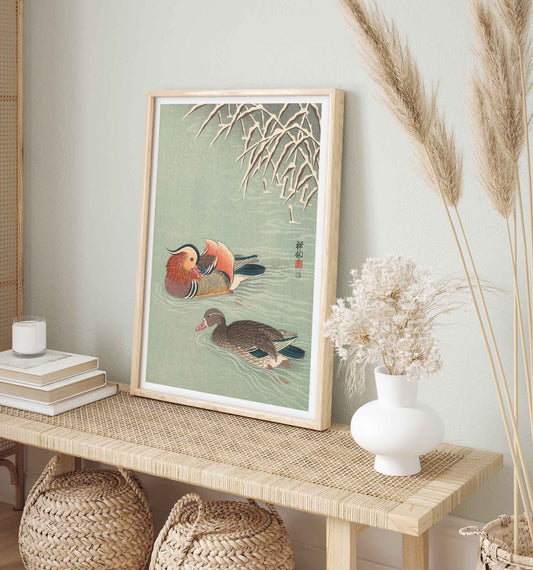
Discover our selection : Heron in Snow · Two Peacocks on a Tree Branch · Flowering Water Lily · Mandarin Ducks · Roaring Tiger
Ohara Koson in the World's Great Museums
Koson's prints are held in the permanent collections of some of the world's most prestigious institutions — a testament to their historical importance and enduring aesthetic power:
- The Metropolitan Museum of Art, New York
- The Museum of Fine Arts, Boston
- The Freer Gallery of Art, Washington D.C.
- The Rijksmuseum, Amsterdam
- The Musée Cernuschi, Paris
Why Collectors Still Seek His Work
Original Koson prints regularly appear at auction, where they command significant prices — particularly pieces from the Watanabe period (1926–1945), noted for their refined color work and technical precision. Their appeal crosses the line between fine art collecting and interior design: they are simultaneously scholarly objects and objects of beauty.
High-Definition Reproductions for Your Home
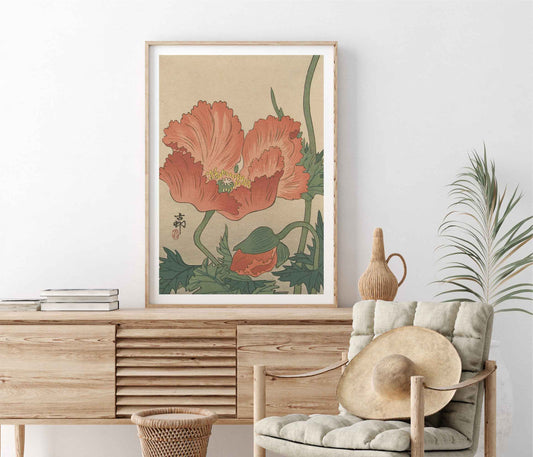
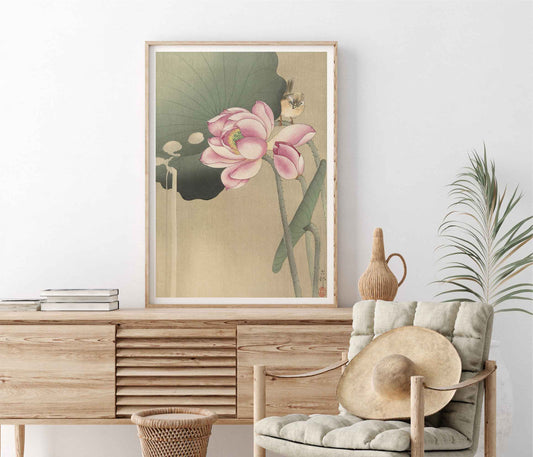
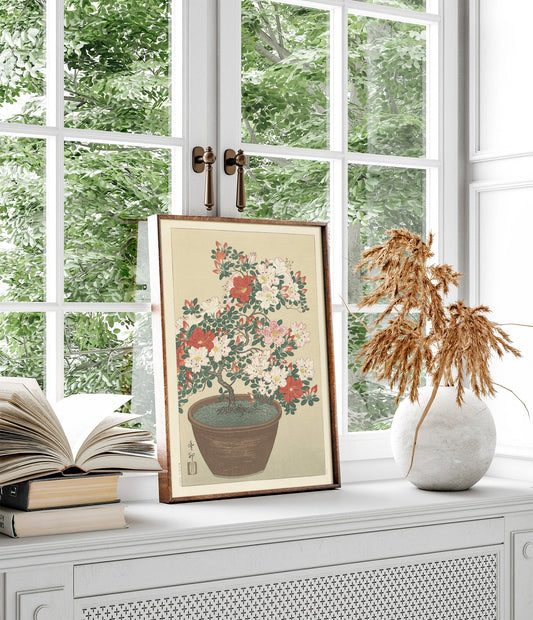
Our Ohara Koson posters are produced using archival giclée printing on premium fine art paper, delivering faithful color reproduction, sharp detail, and lasting quality. Each print carefully captures the subtle gradients, embossed textures, and delicate linework that define Koson's originals.
Whether you are an art collector, a lover of Japanese aesthetics, or simply looking for refined wall art for your living room or workspace, these prints bring museum-quality beauty into everyday spaces.
Want to Go Deeper?
Explore our blog for more context on Koson's art, technique, and legacy — and browse the full Japanese woodblock print collection to discover Kawase Hasui, Hiroshige, and more.