Gustave Doré Prints – The Greatest Illustrator of the 19th Century
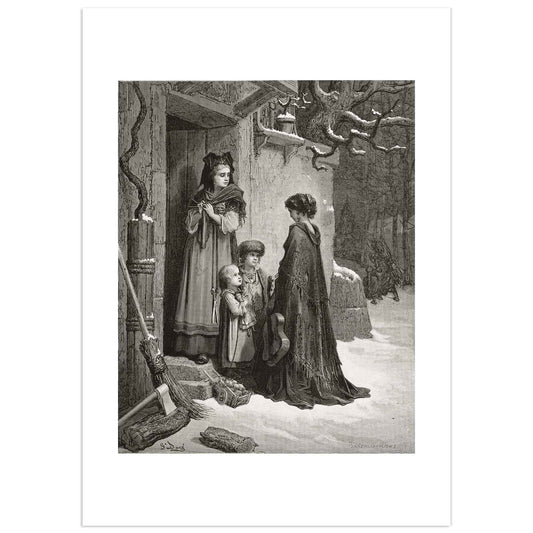
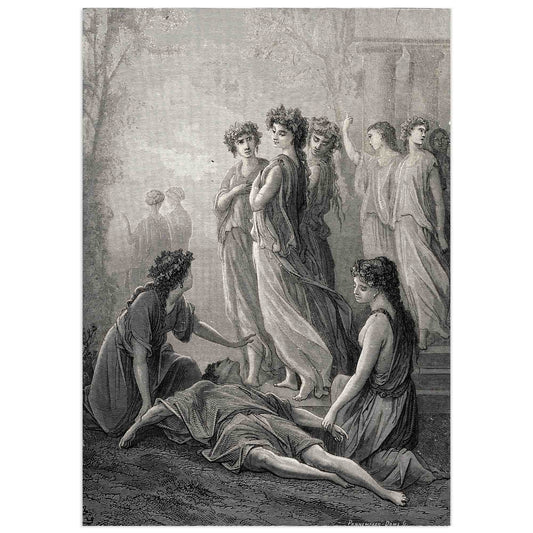
Gustave Doré (1832–1883) was the most prolific and widely reproduced illustrator of the nineteenth century. Before photography dominated the press, Doré's engravings were how the Western world pictured its great literary works — Dante's Inferno, Cervantes' Don Quixote, the fables of La Fontaine, the poems of Edgar Allan Poe, and Milton's Paradise Lost all passed through his hands and came out transformed. His images became the images. For most readers, they still are.
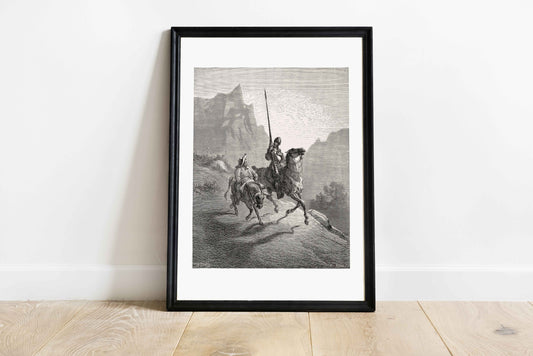
Don Quixote – The Knight of the Sorrowful Face
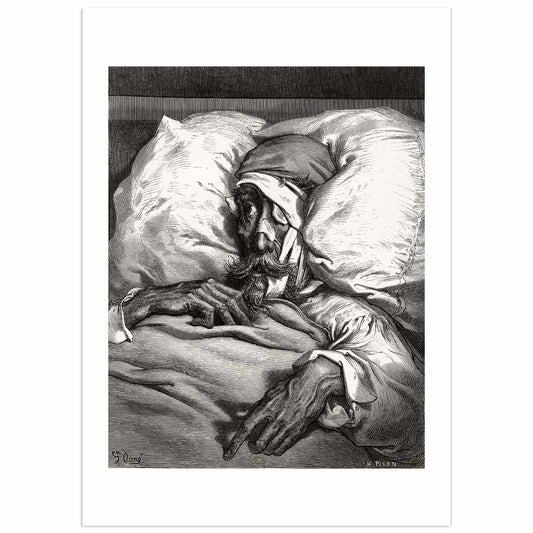
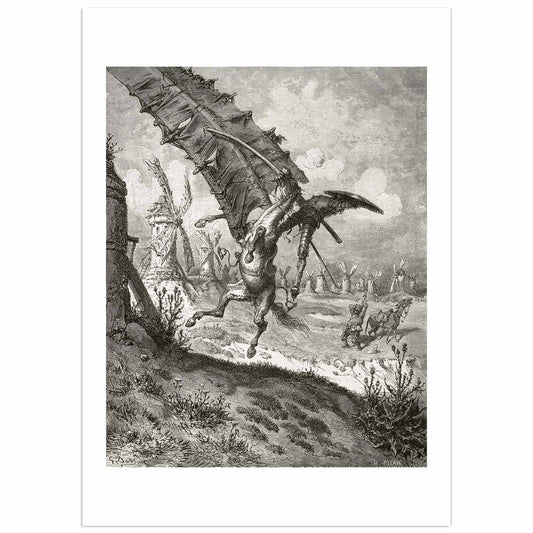
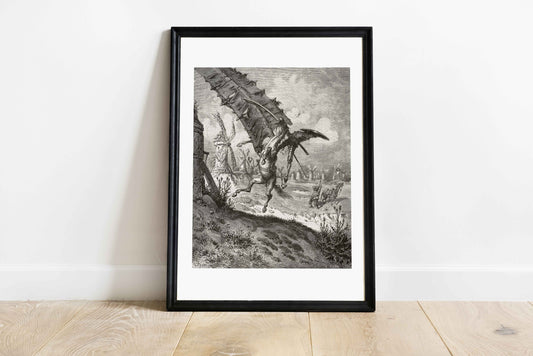
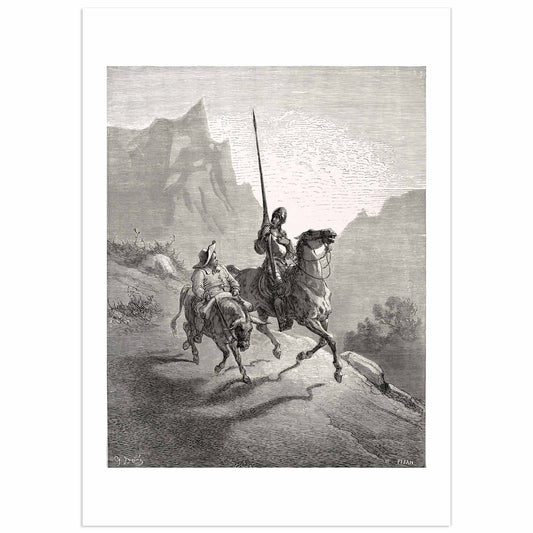
Doré's illustrations for Cervantes' Don Quixote (1863) are among the most recognised literary images ever made. The tall, gaunt knight charging at windmills, Sancho Panza trotting faithfully behind, the madness of a man who has read too many romances and decided to live inside them — Doré rendered these scenes with a combination of grandeur and dark comedy that no illustrator before or since has matched. These prints work as literary objects and as striking interior pieces in equal measure.
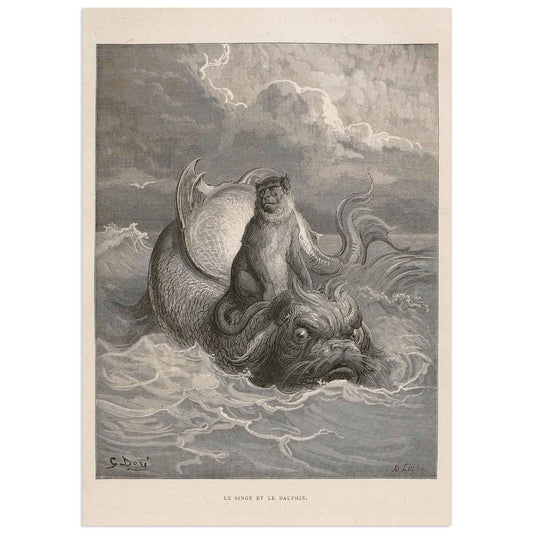
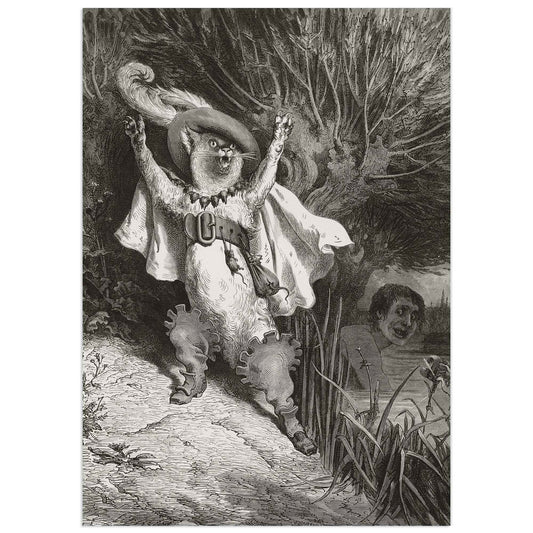
La Fontaine's Fables – Morality in Black and White
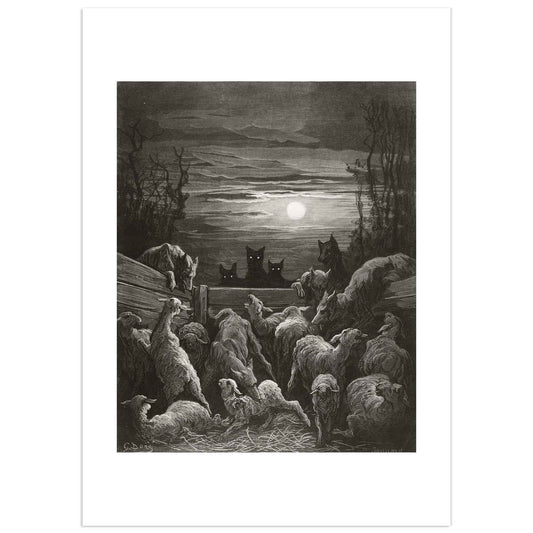
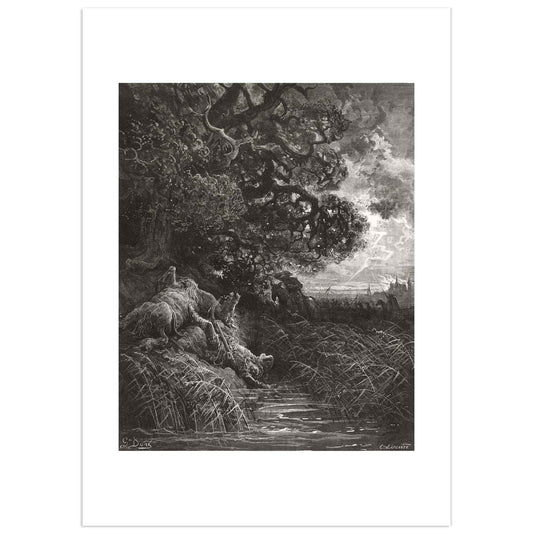
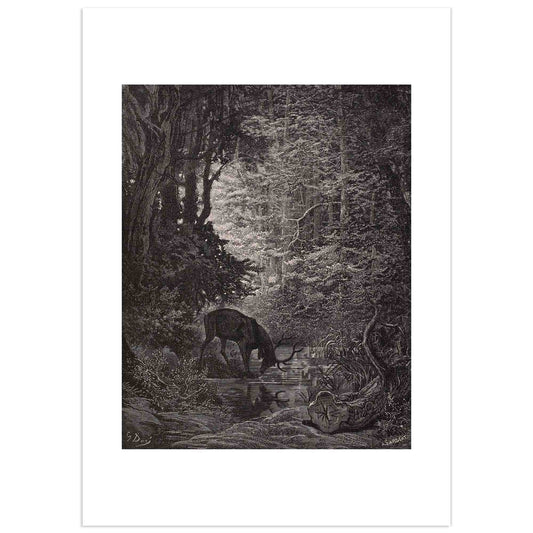
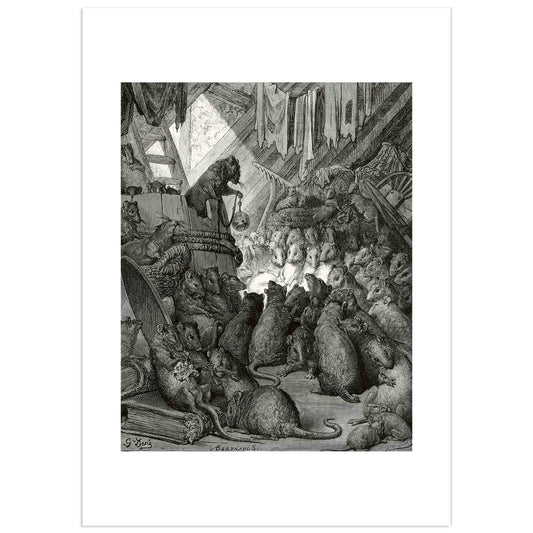
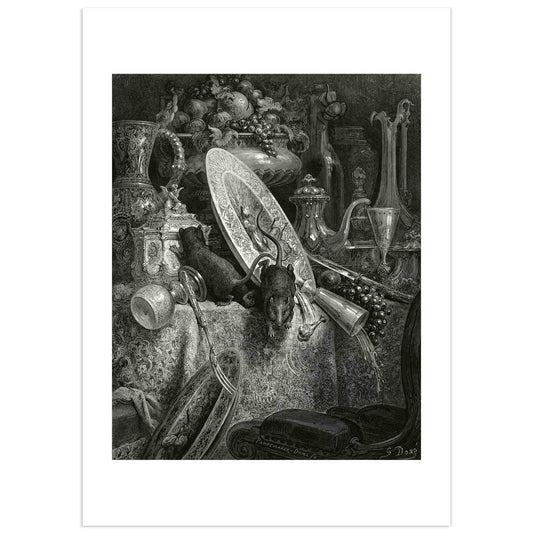
Doré's engravings for Jean de La Fontaine's Fables (1867) are a masterclass in atmosphere and character. The Cicada and the Ant, the Oak and the Reed, the Town Rat and the Country Rat — stories every French schoolchild learns by heart, given visual form by an artist at the height of his powers. The chiaroscuro is dense, the forest settings dramatic, the animals rendered with an almost theatrical sense of personality.
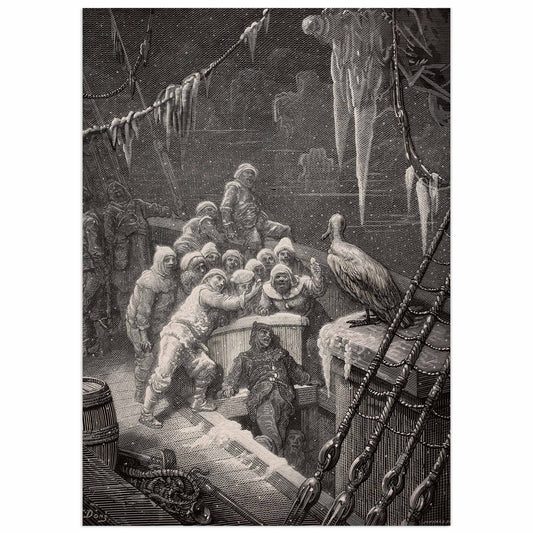
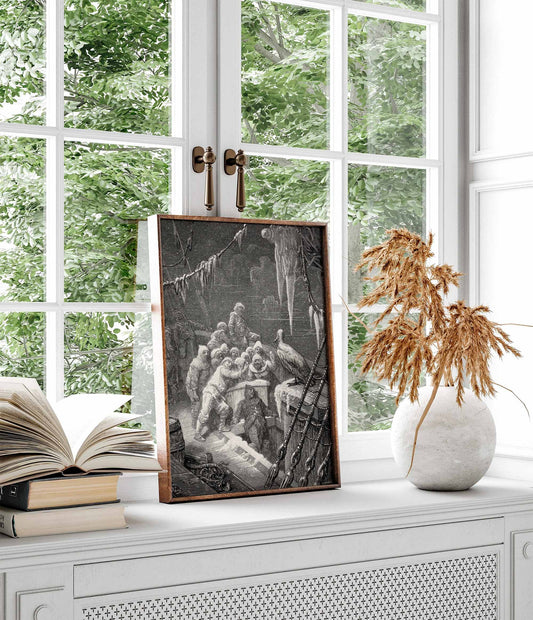
The Ancient Mariner and Edgar Allan Poe
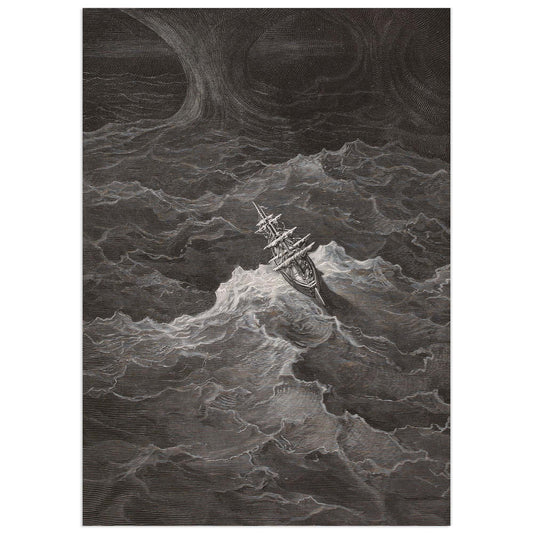
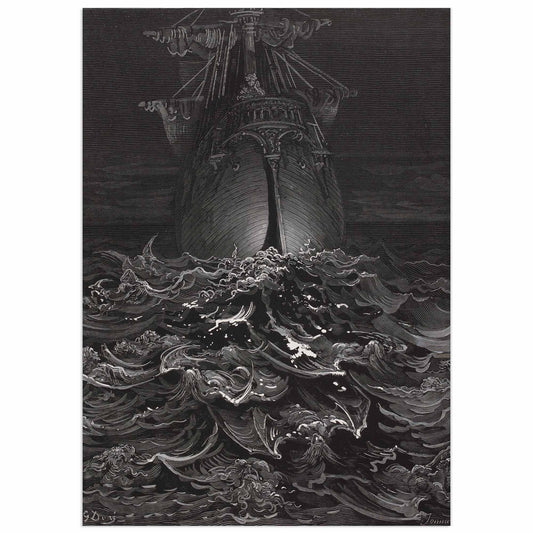
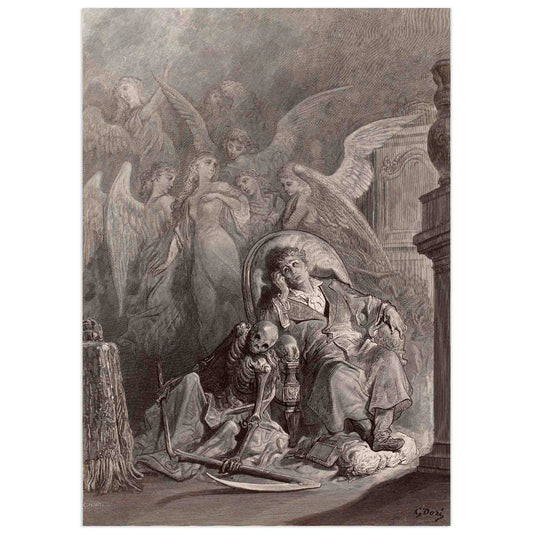
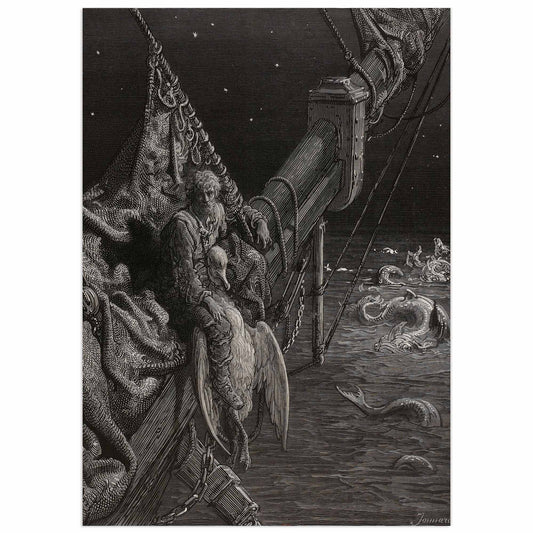
Doré's illustrations for Coleridge's Rime of the Ancient Mariner (1876) and Poe's The Raven (1883) represent the darkest register of his work — and arguably the most powerful. Storm-tossed ships, albatrosses, rotting seas, and spectral figures haunting moonlit chambers. These prints sit naturally in the tradition of Gothic Romanticism and make an immediate visual impact in any interior that can hold them.
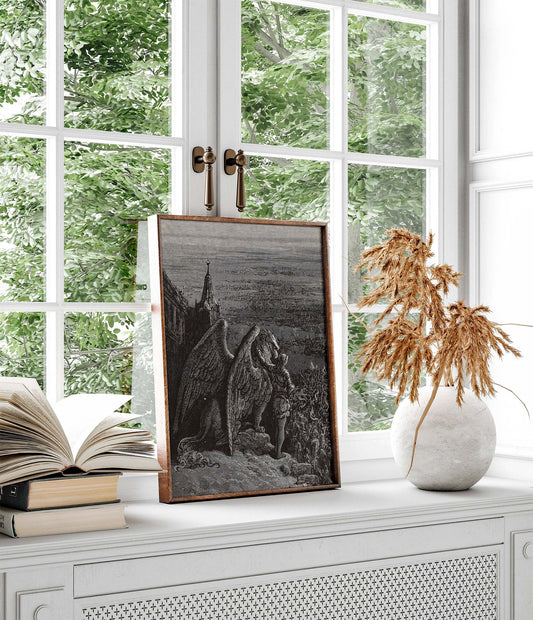
Orlando Furioso – Knights, Monsters and the Hippogriff
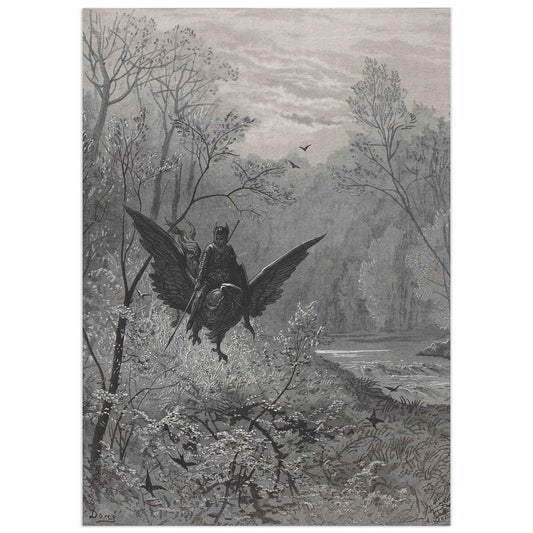
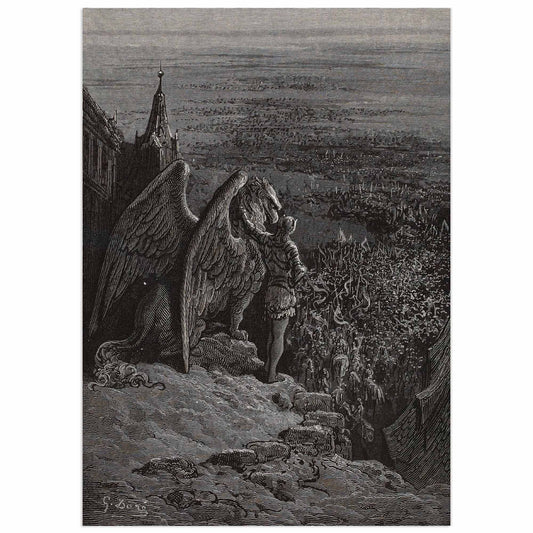
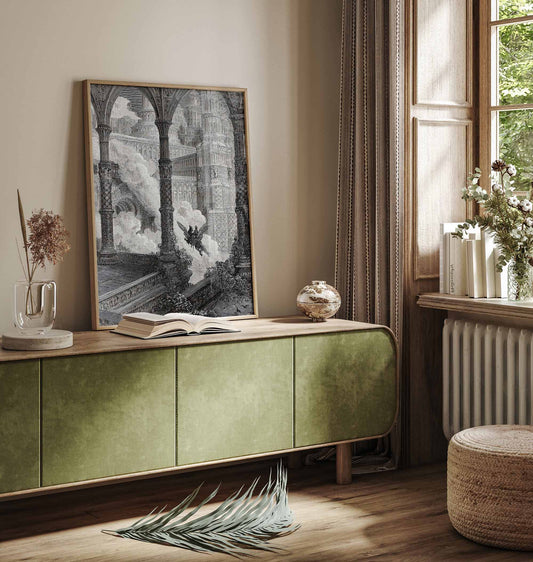
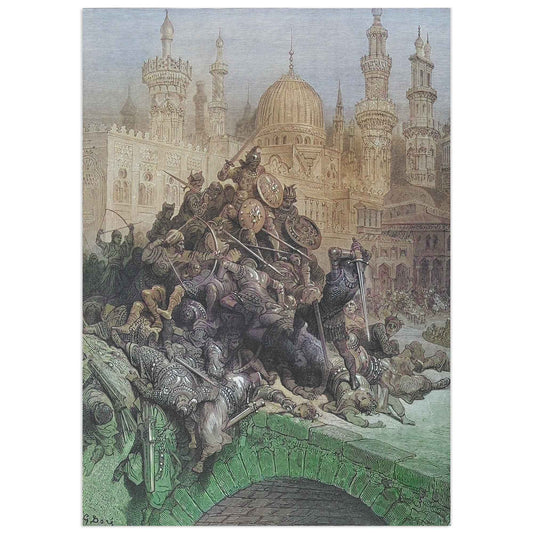
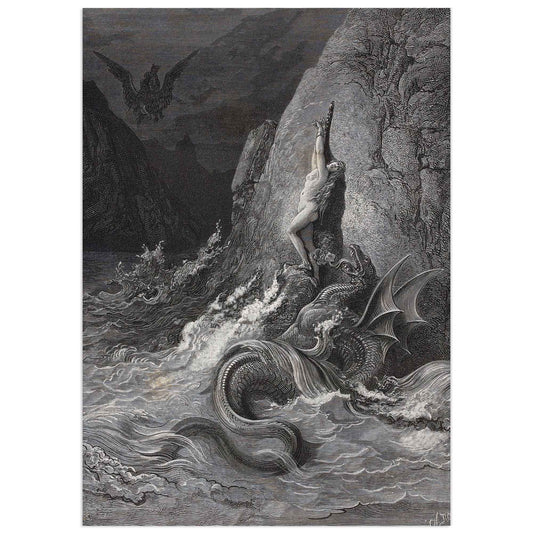
Doré's illustrations for Ariosto's Orlando Furioso give full rein to his love of the fantastical. The hippogriff — half eagle, half horse — carries knights into the sky above a world of sea monsters, enchanted castles, and epic battles. These are among the most dynamic compositions in Doré's entire body of work, their energy barely contained within the frame.
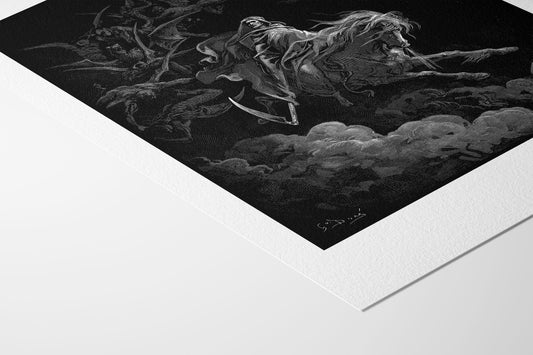
Museum-Quality Gustave Doré Reproductions, Ready to Frame
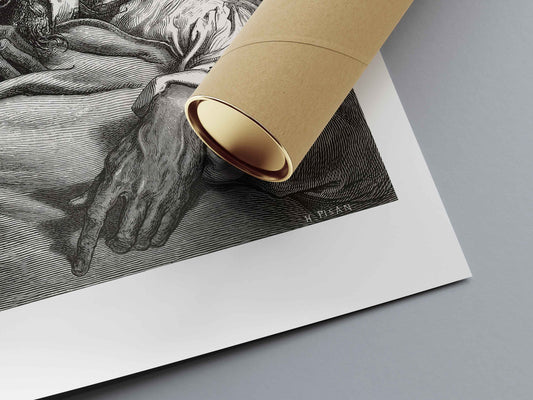
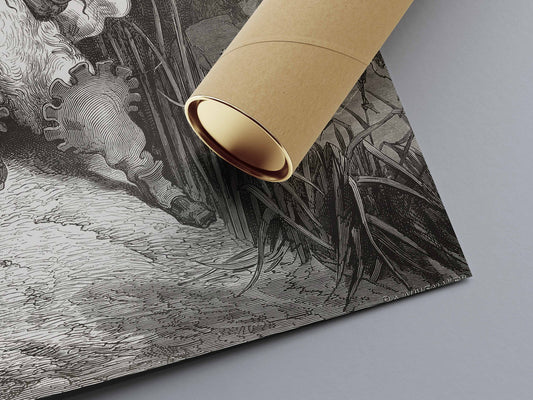
All prints in this collection are reproduced on thick archival paper, preserving the depth and contrast of Doré's original engravings — the velvety blacks, the gradations of light, the intricate crosshatching that gives his work its unmistakable texture. Shipped in a rigid protective tube.
Mini FAQ
What is Gustave Doré best known for?
Gustave Doré is best known for his illustrated editions of Dante's Divine Comedy, Cervantes' Don Quixote, La Fontaine's Fables, the Bible, Coleridge's Rime of the Ancient Mariner, and Poe's The Raven. He was the most widely reproduced illustrator of the 19th century.
What technique did Gustave Doré use?
Doré drew his compositions directly onto wooden blocks, which specialist engravers then cut by hand. The printed result — a wood engraving — allowed for the dense, detailed chiaroscuro effects that define his style: deep blacks, subtle mid-tones, and precise hatching.
Are Gustave Doré prints good for interior decoration?
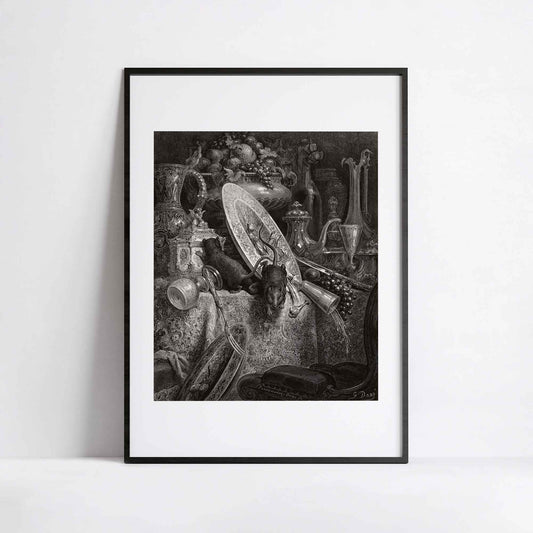
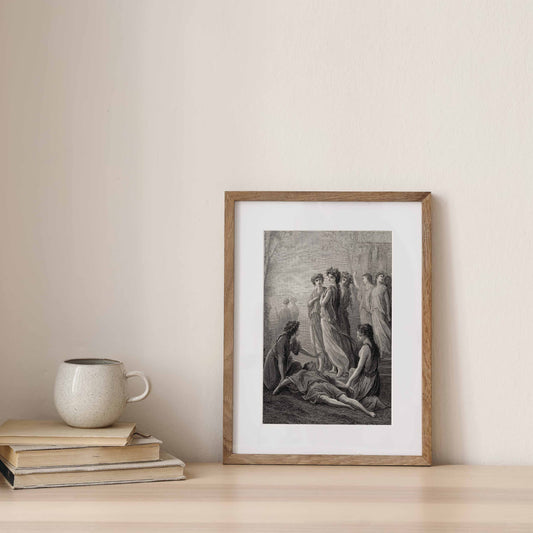
Doré's prints work well in dramatic, literary, or moody interiors — libraries, reading rooms, dark-toned living rooms. Their strong contrast and graphic clarity also hold well in modern minimal settings as bold statement pieces.