Famous Hiroshige Prints and Series
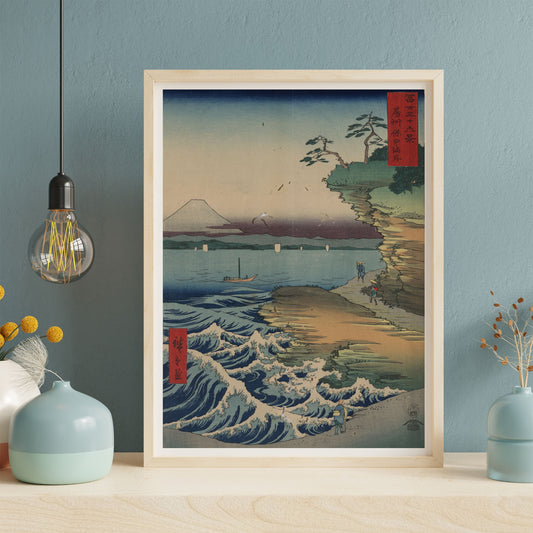
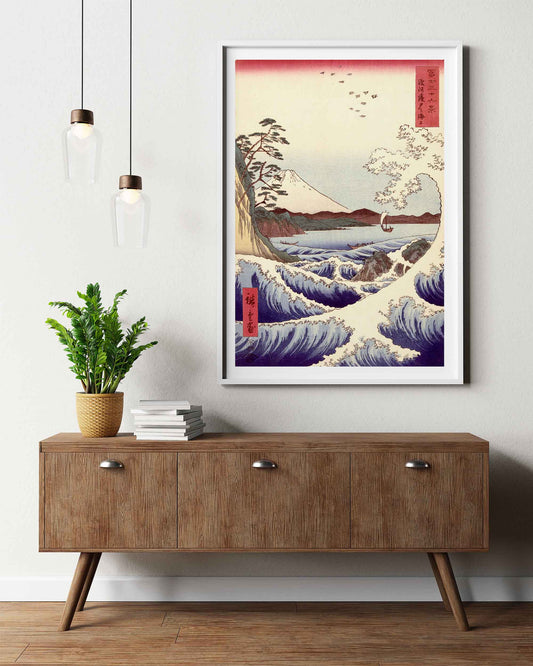
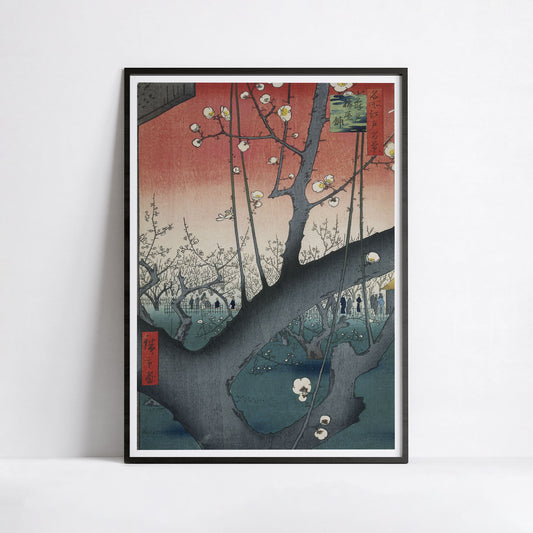
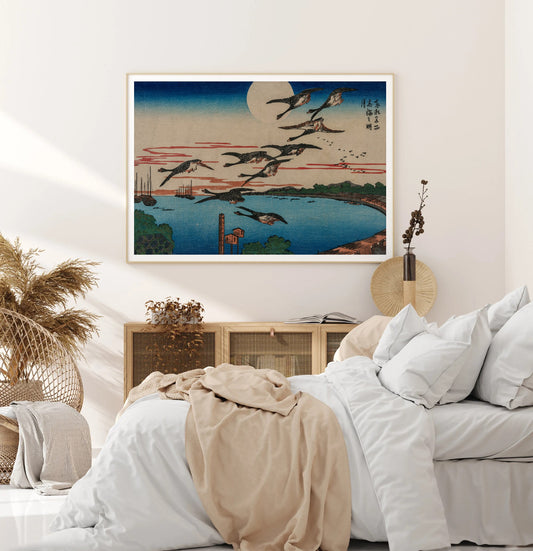
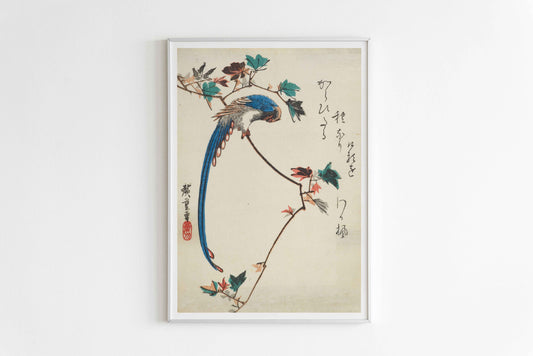
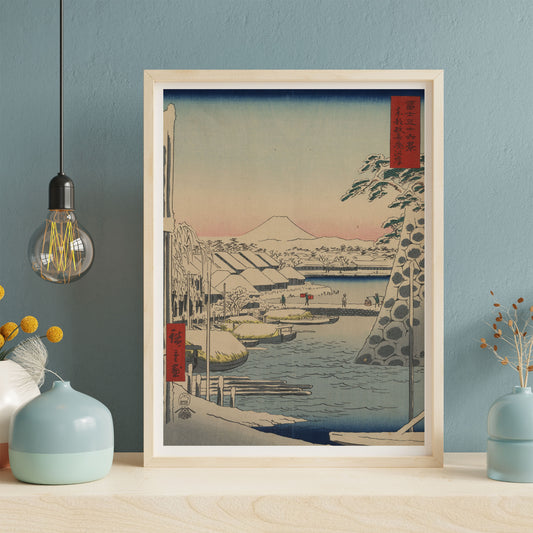
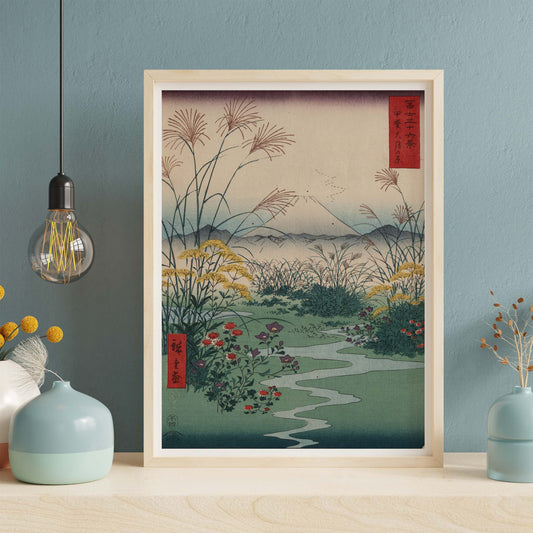
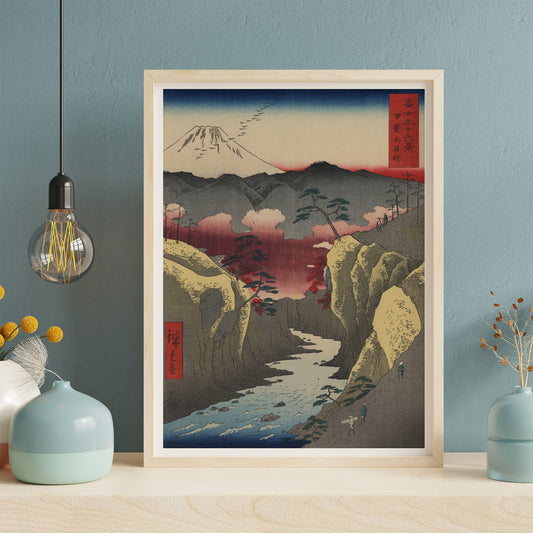
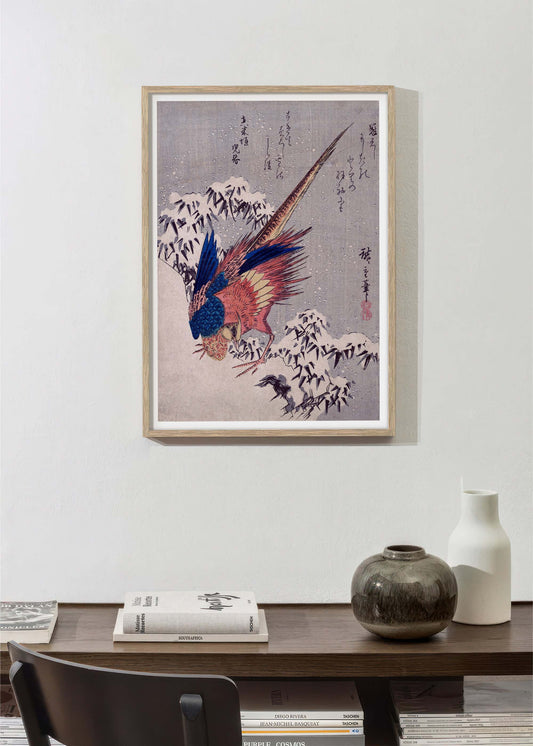
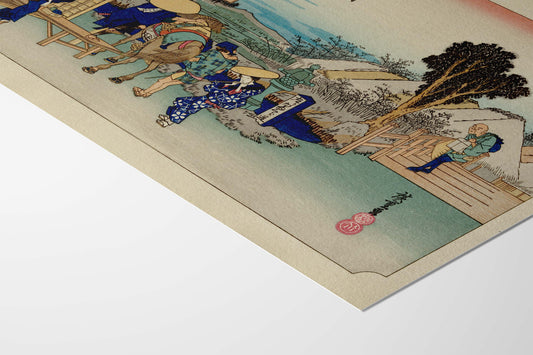
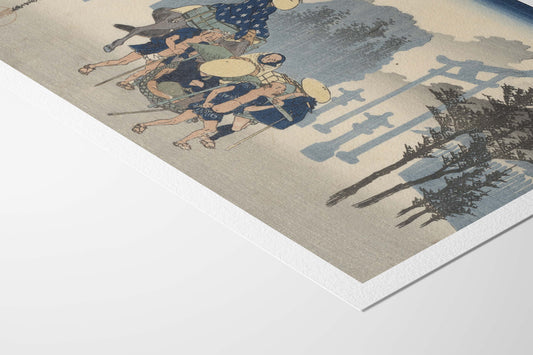
This collection draws from Hiroshige's most celebrated series: the Fifty-Three Stations of the Tōkaidō, the One Hundred Famous Views of Edo, and the Thirty-Six Views of Mount Fuji. These series transformed Japanese landscape printmaking — not as geography, but as atmosphere. Snow falling silent at Kambara. Rain sweeping across Shin-Ōhashi Bridge. Mount Fuji receding into mist on the horizon.
Snow, Rain and Seasonal Views: Hiroshige's Landscapes
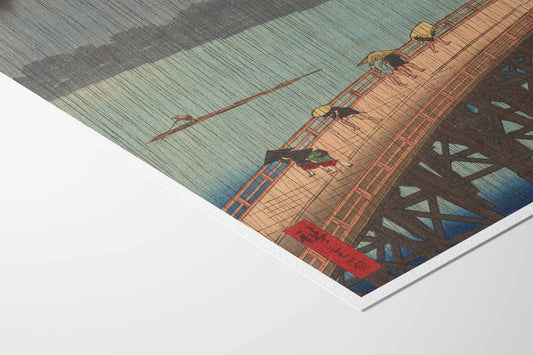
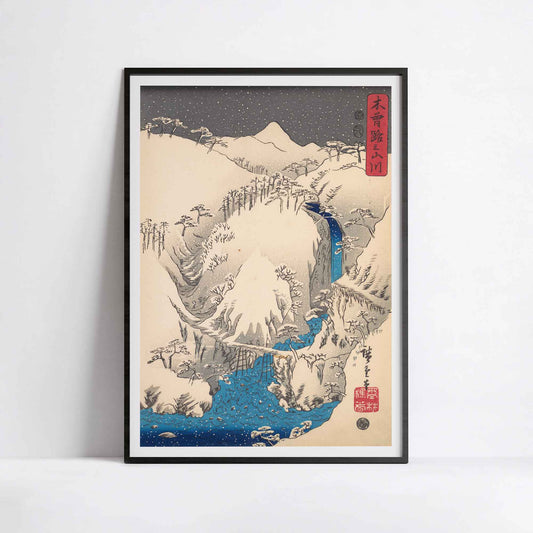
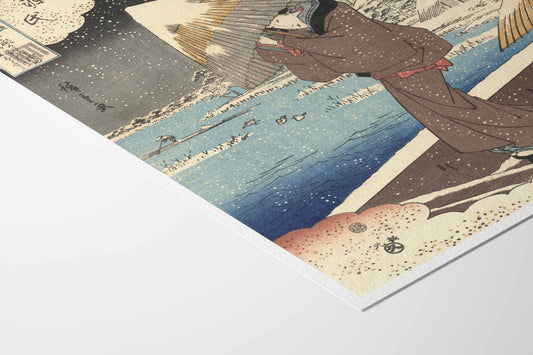
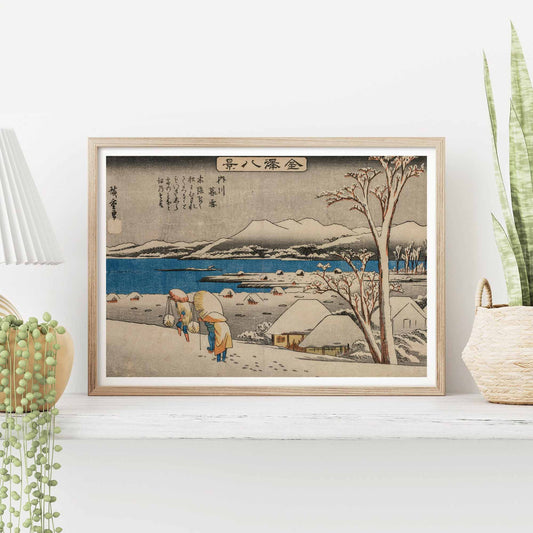
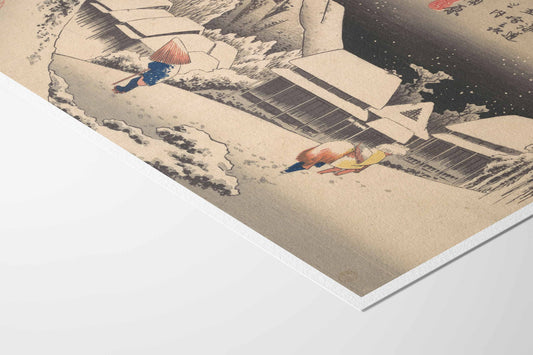
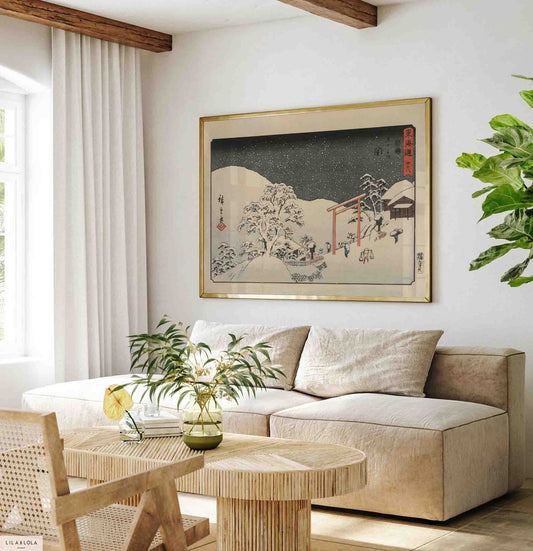
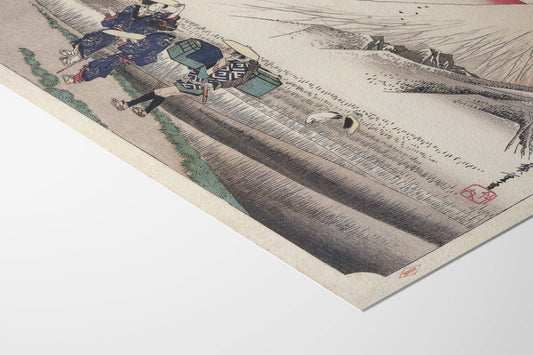
Hiroshige's prints are inseparable from Japanese seasons. His celebrated Kambara night snow composition — one of the most recognisable images in the ukiyo-e tradition — shows a village buried in silence beneath falling flakes. His rain prints, from the Shōno downpour to the vertical lines of the Shin-Ōhashi Bridge shower, treat weather not as backdrop but as subject.
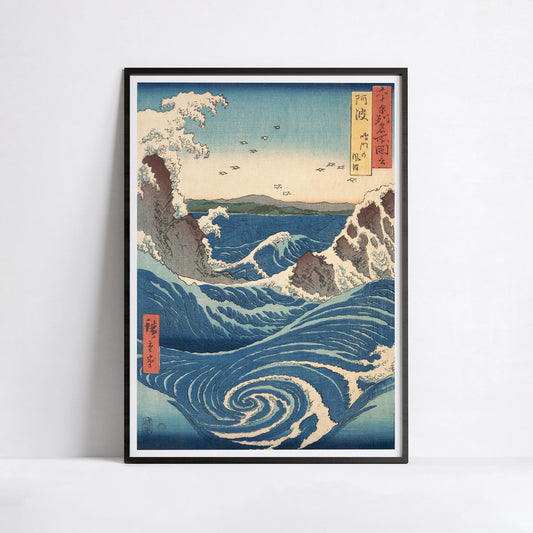
Whether you're looking for a snow scene, a river view, or one of his dramatic Naruto whirlpool compositions, this collection brings together a wide selection of Hiroshige's most enduring works.
Iconic Works: Nihonbashi, the Cat in the Window and the Edo Series
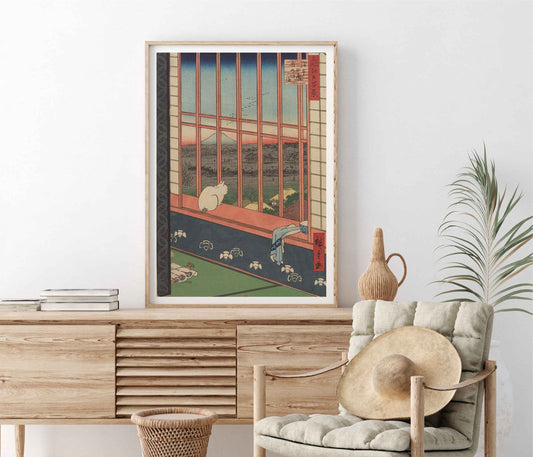
Among the most sought-after Hiroshige prints are the Nihonbashi bridge at dawn, the famous cat-in-the-window view over Asakusa rooftops, and the sweeping urban vistas of the One Hundred Famous Views of Edo. Each composition offers a distinct perspective — intimate or panoramic, urban or wild — on a Japan that was already disappearing as Hiroshige drew it.
Hiroshige and Hokusai: Two Visions of Fuji
Hiroshige's Thirty-Six Views of Mount Fuji stands in quiet dialogue with Hokusai's legendary series of the same subject. Where Hokusai made Fuji a force of nature filling the frame, Hiroshige placed it in the distance — a calm presence in seasonal light. If you're drawn to both artists, explore our Hokusai collection alongside this one.
About Utagawa Hiroshige (Ando Hiroshige, 1797–1858)
Born Andō Tokutarō in Edo, Utagawa Hiroshige became the most influential landscape artist of the ukiyo-e tradition — and the Japanese artist who most directly shaped Impressionism. Van Gogh painted copies of his prints. Monet collected over 230 Japanese woodblocks and arranged them at Giverny with the care of a curator.
→ Read the full story of Hiroshige's life, technique and legacy
Mini FAQ
What is Utagawa Hiroshige famous for?
Utagawa Hiroshige — also known as Ando Hiroshige — is best known for the Fifty-Three Stations of the Tōkaidō (1833) and the One Hundred Famous Views of Edo (1856–1858). His treatment of rain, snow and atmospheric light made him the most influential Japanese landscape artist in the ukiyo-e tradition.
What is the difference between Hiroshige and Hokusai?
Both artists produced landmark series of Mount Fuji views, but their approaches contrast sharply. Hokusai's Fuji is an elemental, dominant presence; Hiroshige's recedes into misty distance. Hokusai favoured bold geometry and dramatic scale; Hiroshige favoured mood, season, and quieter observation.
What is Kambara night snow?
Kambara night snow is one of the most celebrated prints from the Fifty-Three Stations of the Tōkaidō. It depicts a snowbound village at night, its rooftops and figures blanketed in white silence — one of the defining images of Japanese printmaking.
Are Hiroshige prints good for interior decoration?
Hiroshige prints work exceptionally well in both contemporary and traditional interiors. Their muted palettes, atmospheric depth, and strong compositional lines integrate naturally into gallery walls or as standalone statement pieces.