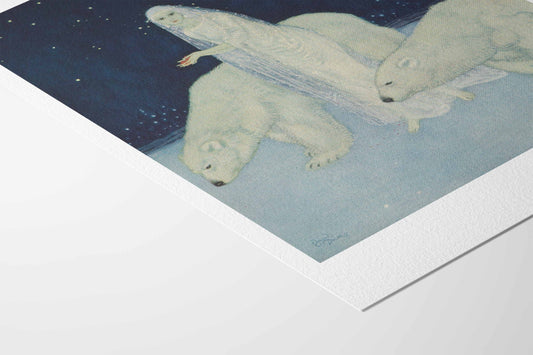
Edmund Dulac Prints – Fairy Tales, Arabian Nights and Golden Age Illustration
Edmund Dulac (1882–1953) was one of the defining illustrators of the Golden Age of Illustration — a period roughly spanning the 1880s to the 1920s, when advances in colour printing transformed the illustrated book into an art object. Alongside Arthur Rackham and Kay Nielsen, Dulac created images that became inseparable from the stories they depicted.
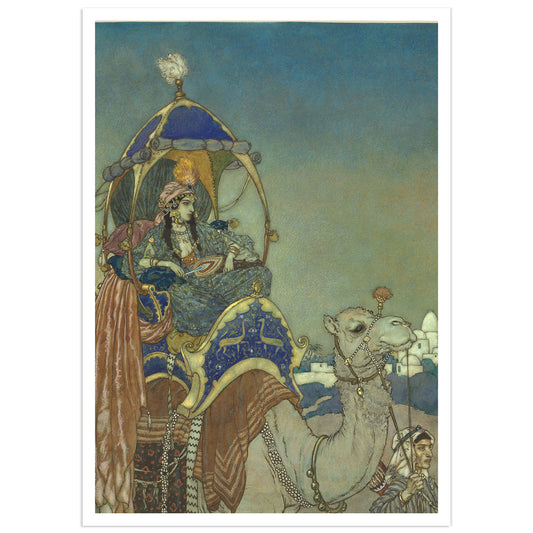
His illustrations for Stories from the Arabian Nights (1907), Stories from Hans Christian Andersen (1911), and The Rubaiyat of Omar Khayyam (1909) established a visual language that blended Persian miniature art, Art Nouveau decorative sensibility, and a luminous watercolour technique unlike anything his contemporaries attempted. When you look at a Dulac illustration, you are looking at a synthesis of East and West that was genuinely new.
The Snow Queen, the Little Mermaid and the Arabian Nights
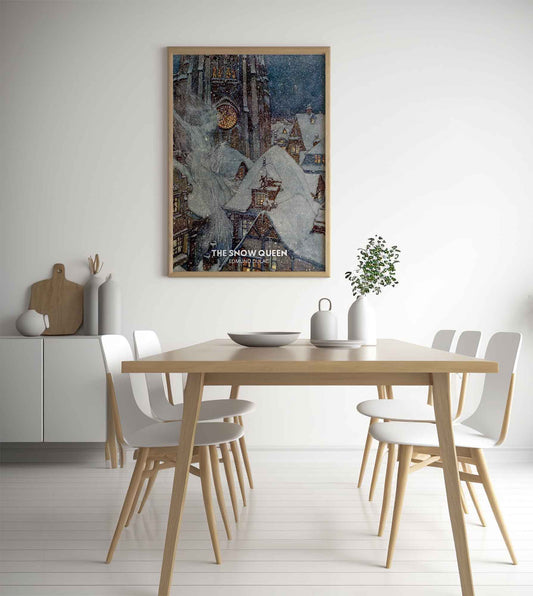
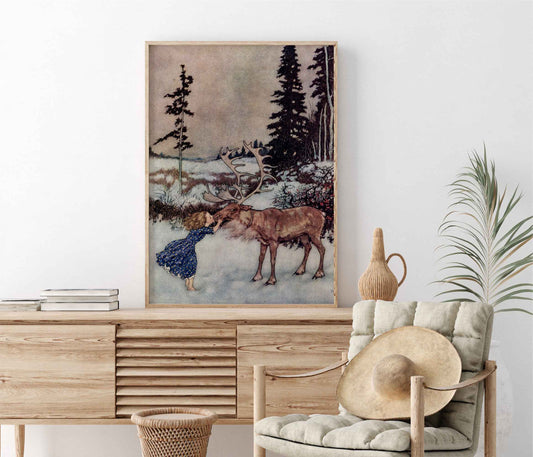
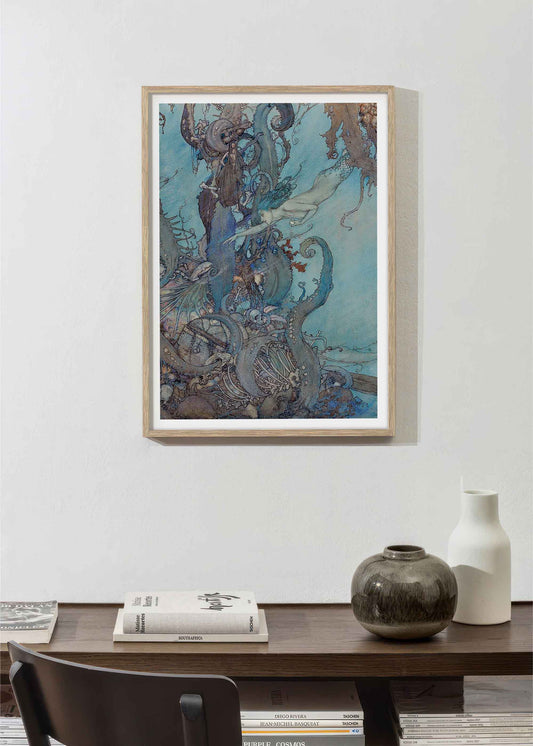
The works most associated with Dulac are his Hans Christian Andersen illustrations — the Snow Queen in her palace of ice, the Little Mermaid suspended in deep water, the reindeer crossing a frozen wilderness — and his Arabian Nights scenes, dense with jewel colours, embroidered robes, and architectural detail drawn from Islamic art. These prints bring that world directly into your interior.
Edmund Dulac and the Golden Age of Illustration
Born in Toulouse and trained at the École des Beaux-Arts, Dulac moved to London in 1905 and never looked back. His annual exhibitions at the Leicester Galleries sold out. His books were luxury gift editions, printed on heavy paper with colour plates tipped in by hand. They were the coffee-table books of their era. Today, reproductions of his illustrations make perfect pieces for living rooms, reading rooms, and children's bedrooms — wherever storytelling and beauty belong together.
Museum-Quality Edmund Dulac Posters, Ready to Frame
All prints in this collection are reproduced on thick archival paper, with colour fidelity that preserves Dulac's characteristic deep teals, warm golds, and translucent watercolour washes. Shipped in a rigid protective tube.
Mini FAQ
What is Edmund Dulac famous for?
Edmund Dulac is best known for his illustrated editions of Stories from the Arabian Nights (1907), Stories from Hans Christian Andersen (1911), and The Rubaiyat of Omar Khayyam (1909). He is considered one of the three great illustrators of the Golden Age, alongside Arthur Rackham and Kay Nielsen.
What style did Edmund Dulac use?
Dulac worked in watercolour, blending Western Art Nouveau decoration with strong influences from Persian miniature painting and East Asian art. His illustrations are known for their rich jewel tones, intricate pattern work, and dreamlike atmosphere.
Are Edmund Dulac prints good for interior decoration?
Dulac's prints work beautifully in both classic and contemporary interiors. Their rich colour palettes and narrative depth make them ideal as statement pieces or as part of a gallery wall combining Golden Age illustrators.