
-
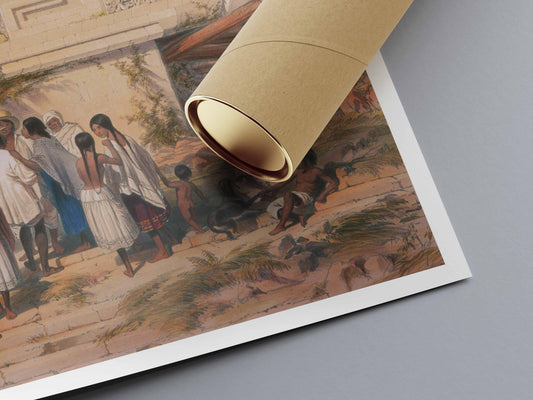
Plate 19, Gateway at Labnah - Frederick Catherwood
Vendor:WallangoRegular price From $35.00Regular priceUnit price per -
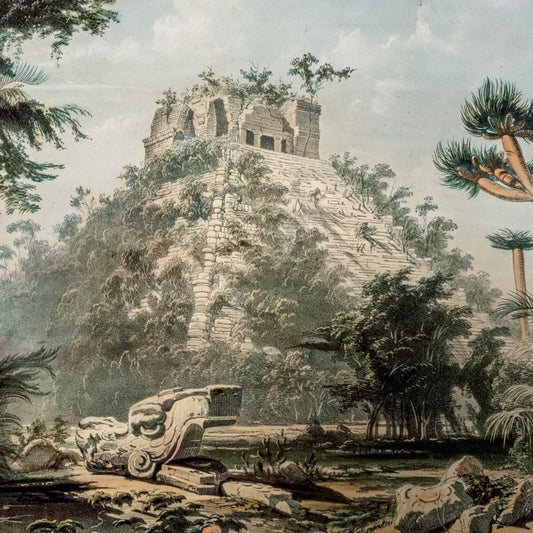
Frederick Catherwood - Castle at Tuloom Maya Ruins Art Print Poster
Vendor:WallangoRegular price From $35.00Regular priceUnit price per -
Frederick Catherwood - General View of Uxmal Maya Ruins Art Print Poster
Vendor:WallangoRegular price From $35.00Regular priceUnit price per -
Well and building at Sabachtsché (Yucatán) - Frederick Catherwood
Vendor:WallangoRegular price From $35.00Regular priceUnit price per -
El Castillo at Chichén Itzá – Frederick Catherwood (1844)
Vendor:WallangoRegular price From $35.00Regular priceUnit price per -
Frederick Catherwood poster - La Casa de las Monjas
Vendor:WallangoRegular price From $35.00Regular priceUnit price per -
Uxmal Poster - Frederick Catherwood
Vendor:WallangoRegular price From $42.00Regular priceUnit price per -
Stela at Copan - Frederick Catherwood
Vendor:WallangoRegular price From $35.00Regular priceUnit price per -
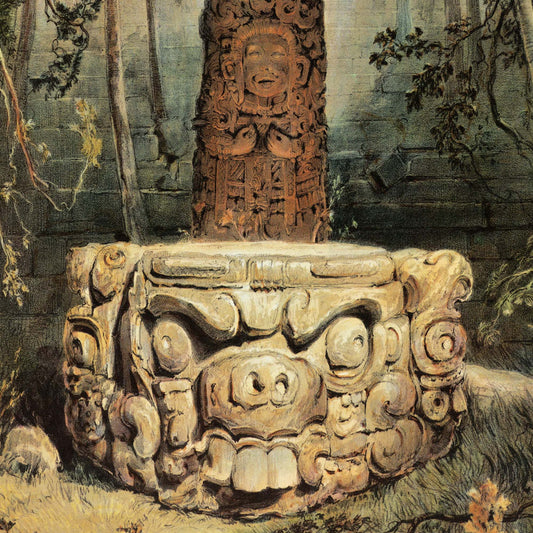
Idol and Altar at Copán – Frederick Catherwood (1844)
Vendor:WallangoRegular price From $35.00Regular priceUnit price per -
Idol at Copán – Frederick Catherwood (1844)
Vendor:WallangoRegular price From $35.00Regular priceUnit price per

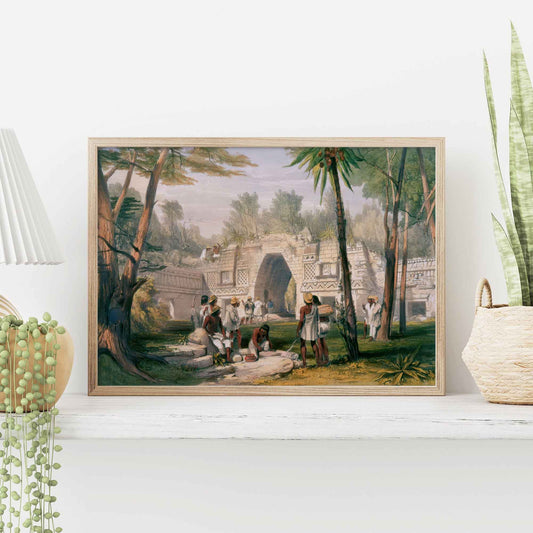

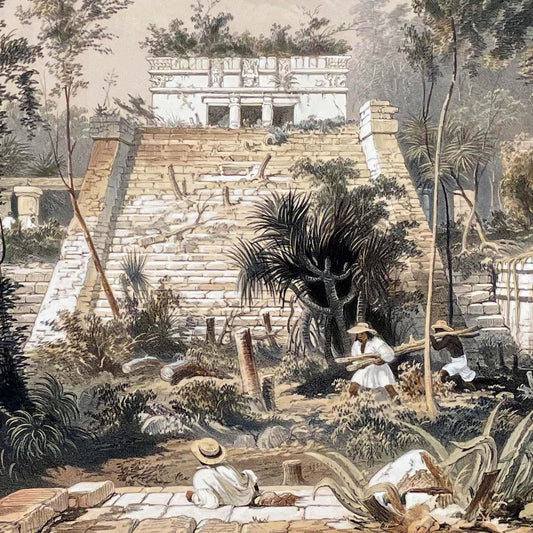

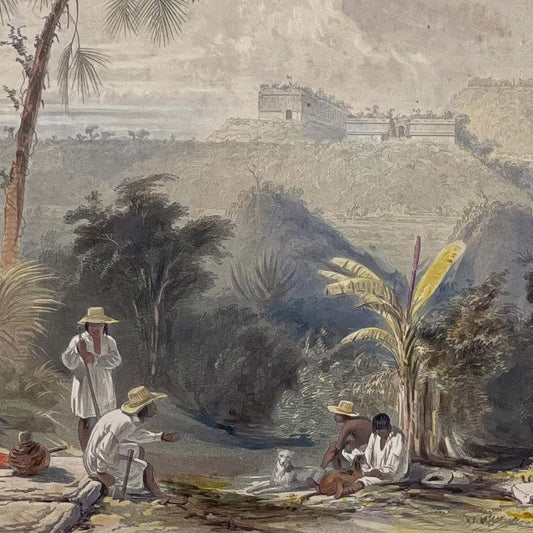








Frederick Catherwood prints: the Maya ruins rediscovered
In 1839, the English architect and artist Frederick Catherwood (1799–1854) set off into the forests of Central America with the American writer John Lloyd Stephens. Over two expeditions, he drew the temples, palaces and carved stelae of the ancient Maya with extraordinary precision, often using a camera lucida. In 1844 he published Views of Ancient Monuments in Central America, Chiapas and Yucatan, a set of 25 lithographs from which these prints are taken. Read his story in Frederick Catherwood, in search of America’s lost cities.
Uxmal, Chichén Itzá and Tulum
In Yucatán, Catherwood drew the great sites that still attract visitors today: the general view of Uxmal and its Nunnery Quadrangle (Casa de las Monjas), the pyramid of El Castillo at Chichén Itzá, and the Castle at Tulum, overlooking the Caribbean Sea.


Labná, Sabachtsché and Copán
Less famous sites have their own magic: the Gateway at Labná with its corbelled arch, the well and building at Sabachtsché, and, in Honduras, the carved stelae of Copán, half swallowed by the jungle: Idol at Copán, Idol and Altar and Stela at Copán.


Hanging a Catherwood print
Catherwood’s plates are documents as much as images: architecture recorded stone by stone, with small human figures and tropical vegetation closing in. They suit a study, a hallway or a living room with a taste for travel and archaeology. A series of three or four sites in matching frames tells the story of the expedition.
Frequently asked questions
Who was Frederick Catherwood?
An English architect and artist who explored the Maya sites of Mexico, Guatemala and Honduras with John Lloyd Stephens between 1839 and 1842, and published his views of the ruins as lithographs in 1844.
Are these original lithographs?
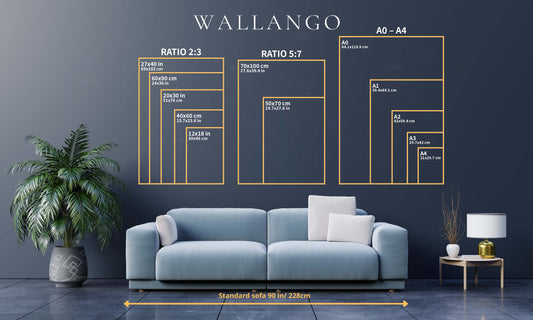
No. They are museum-quality reproductions, restored from high-definition scans and printed on thick matte archival paper, in sizes made for standard frames. Shipping is free, with no minimum order.
Explore further