
-
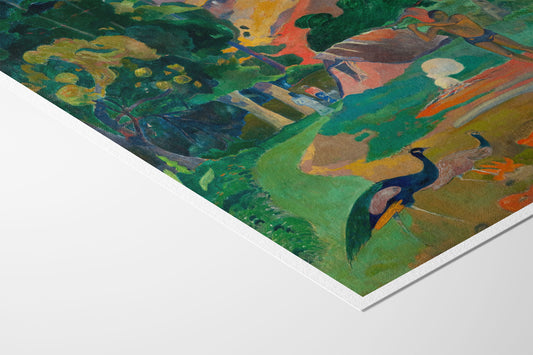
Matamoe, Landscape with Peacocks – Paul Gauguin (1892)
Vendor:WallangoRegular price From $35.00Regular priceUnit price per -
Paul Gauguin Poster - Two Tahitian
Vendor:WallangoRegular price From $35.00Regular priceUnit price per$0.00Sale price From $35.00 -
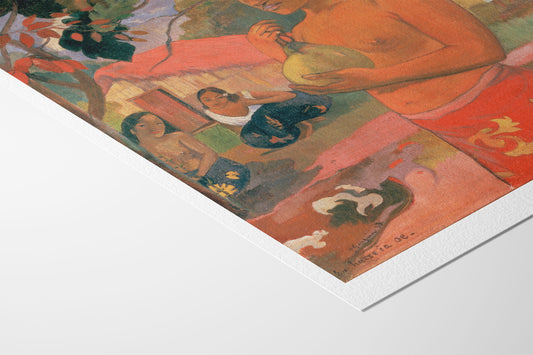
Woman Holding a Fruit (Eu haere ia oe)
Vendor:WallangoRegular price From $35.00Regular priceUnit price per$0.00Sale price From $35.00 -
The Girl with a Fan (Jeune fille à l'éventail) – Paul Gauguin (1902)
Vendor:WallangoRegular price From $35.00Regular priceUnit price per -
Tahitian Landscape – Paul Gauguin (1891)
Vendor:WallangoRegular price From $35.00Regular priceUnit price per$0.00Sale price From $35.00 -
Three Tahitians – Paul Gauguin (1899)
Vendor:WallangoRegular price From $35.00Regular priceUnit price per$0.00Sale price From $35.00 -
Paul Gauguin, Parau Api. What News
Vendor:WallangoRegular price From $35.00Regular priceUnit price per$0.00Sale price From $35.00 -
Still Life with Teapot and Fruit, Paul Gauguin
Vendor:WallangoRegular price From $35.00Regular priceUnit price per$0.00Sale price From $35.00 -
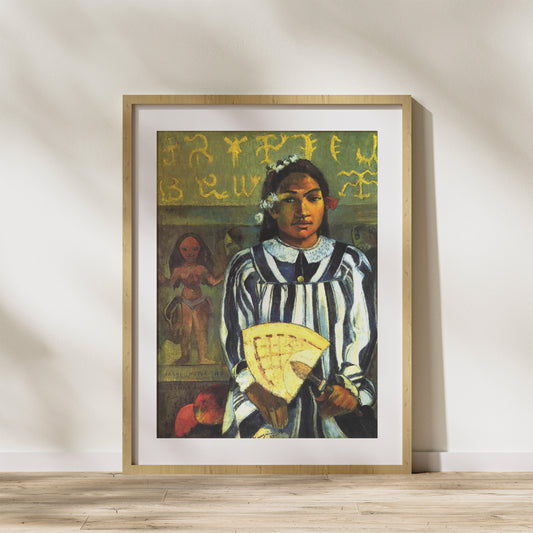
The Ancestors of Tehamana (Merahi metua no Tehamana) – Paul Gauguin (1893)
Vendor:WallangoRegular price From $35.00Regular priceUnit price per$0.00Sale price From $35.00 -
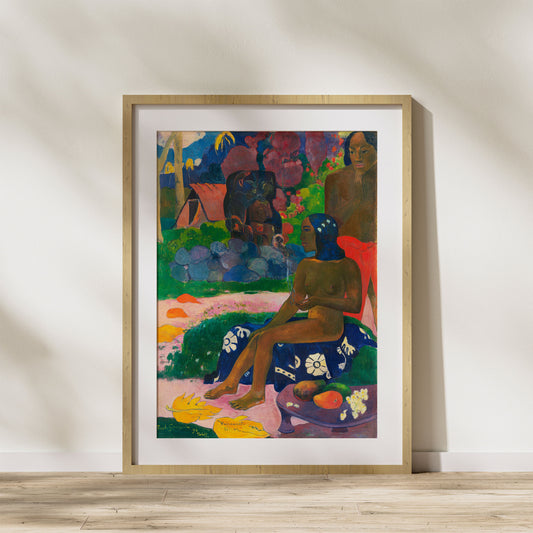
Her Name Is Vairaumati (Vairumati tei oa) – Paul Gauguin (1892)
Vendor:WallangoRegular price From $35.00Regular priceUnit price per$0.00Sale price From $35.00 -
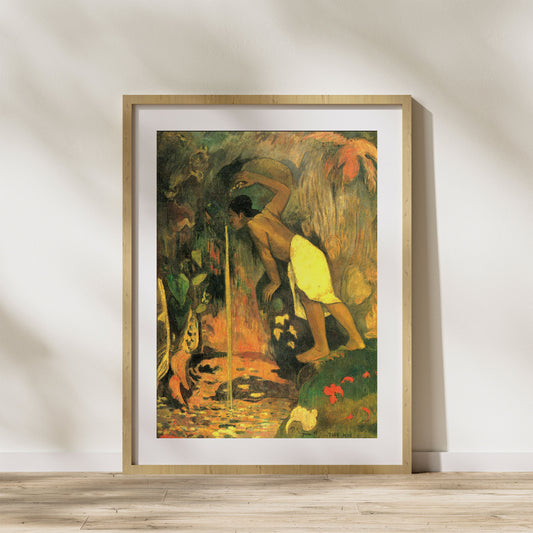
Pape Moe (Mysterious Water) – Paul Gauguin (1893)
Vendor:WallangoRegular price From $35.00Regular priceUnit price per$0.00Sale price From $35.00 -
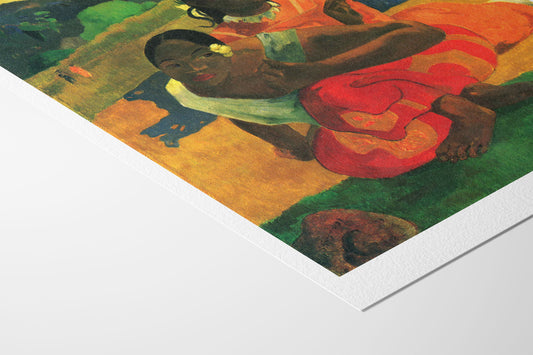
When Will You Marry? (Nafea Faa Ipoipo) – Paul Gauguin (1892)
Vendor:WallangoRegular price From $35.00Regular priceUnit price per$0.00Sale price From $35.00










Paul Gauguin posters: the colours of Tahiti
Paul Gauguin (1848–1903) left a career as a Paris stockbroker to paint, first in Brittany, then in Polynesia. In 1891 he sailed for Tahiti, in search of a world he imagined untouched; he returned there in 1895 and died in the Marquesas Islands in 1903. His flat areas of pure colour, his simplified forms and his dreamlike scenes opened the way to modern art. Read When painters travelled the world.
Tahitian landscapes
From his first stay come Tahitian Landscape (1891), with its red earth and blue mountains, and Matamoe, Landscape with Peacocks (1892), where a man cuts wood beside a hut. Parau Api (1892) shows two women chatting, seated on the grass.


Portraits of Polynesian women
Gauguin’s figures have a calm, sculptural presence: Woman Holding a Fruit (Eu haere ia oe) (1893), Two Tahitian Women (1899), Three Tahitians (1899) and, from his last years in the Marquesas, The Girl with a Fan (1902).


Still lifes
Gauguin also painted the objects of daily life with the same bold colour: Still Life with Teapot and Fruit (1896) brings together mangoes, a teapot and a patterned cloth, a cheerful piece for a kitchen or a dining room.
Hanging a Gauguin poster
Gauguin’s ochres, greens and pinks bring warmth to a living room, a bedroom or a sunny hallway. They pair well with rattan, linen, terracotta and plants. Choose natural wood frames to echo the warm tones, or white frames for a fresher, gallery look.
Frequently asked questions
When did Gauguin live in Tahiti?
From 1891 to 1893, then again from 1895. In 1901 he moved to the Marquesas Islands, where he died in 1903.
Are these canvases or paper prints?
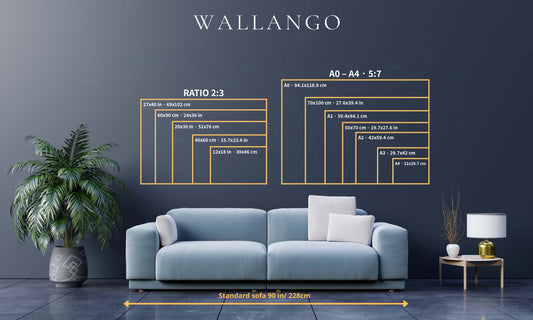
They are museum-quality reproductions, restored from high-definition scans and printed on thick matte archival paper, in sizes made for standard frames. Shipping is free, with no minimum order.