
-
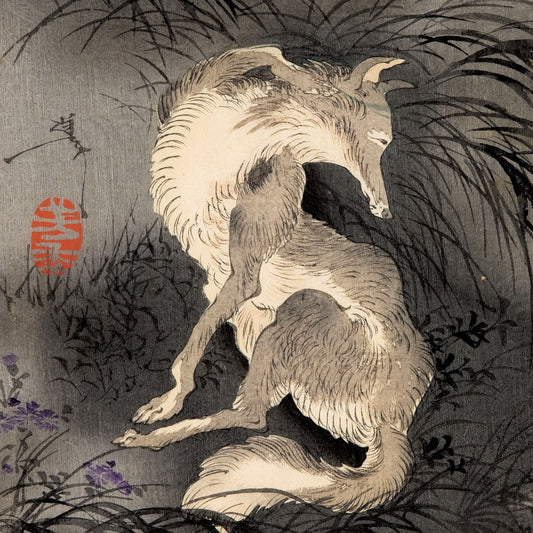
The Moon on Musashi Plain (Musashino no Tsuki) – Tsukioka Yoshitoshi Fox Print
Vendor:WallangoRegular price From $35.00Regular priceUnit price per -
Yoshitoshi – The Cry of the Fox
Vendor:WallangoRegular price From $35.00Regular priceUnit price per -
Yugao (The Tale of Genji), Tsukioka Yoshitoshi
Vendor:WallangoRegular price From $35.00Regular priceUnit price per -
I no Hayata Kills the Nue, Tsukioka Yoshitoshi
Vendor:WallangoRegular price From $35.00Regular priceUnit price per -
Shirafuji Genta Watching Kappa Wrestle, Yoshitoshi
Vendor:WallangoRegular price From $35.00Regular priceUnit price per -
Taira Yoshikado Disarming Two Goblins, Tsukioka Yoshitoshi
Vendor:WallangoRegular price From $35.00Regular priceUnit price per -
Earth Spider, Yoshitoshi ukiyo-e print
Vendor:WallangoRegular price From $35.00Regular priceUnit price per



Tsukioka Yoshitoshi prints: the last great master of ukiyo-e
Tsukioka Yoshitoshi (1839–1892) entered the studio of Utagawa Kuniyoshi as a boy and became, for many collectors, the last great master of ukiyo-e. He lived through the fall of the shogunate and the rapid modernisation of Meiji Japan, when photography was pushing the woodblock print aside. His answer was a body of work of rare intensity: tense, theatrical scenes with a sense of movement that already feels modern.
Yoshitoshi’s yokai: ghosts, foxes and demons
Yoshitoshi loved the supernatural. I no Hayata kills the nue, a chimera that haunted the imperial palace; Shirafuji Genta watches kappa wrestling in a river; Taira Yoshikado disarms two goblins; and Minamoto no Yorimitsu faces the Earth Spider.


One Hundred Aspects of the Moon
His late masterpiece, the series One Hundred Aspects of the Moon (1885–1892), gathers legends, poems and episodes of history under the same moonlight. Yugao, a heroine of The Tale of Genji, appears beside the evening-glory flowers that gave her her name, while foxes haunt The Cry of the Fox and The Moon on Musashi Plain. Fewer colours, more silence: these are his most poetic prints.


Hanging a Yoshitoshi print
Yoshitoshi’s strong lines and contrasts suit a study, a library or a hallway. The moon prints, with their soft greys and blues, work well in a bedroom or as a set of two or three. A black or dark wood frame with a wide white mat gives them the look of an antique print.
Frequently asked questions
Are these original Yoshitoshi woodblock prints?
No. They are museum-quality reproductions restored from high-definition scans of the originals and printed on thick matte archival paper. Original impressions are sold by specialist galleries and auction houses.
Who was Yoshitoshi’s teacher?
Utagawa Kuniyoshi, the master of warrior prints and cats. Discover his work in our Kuniyoshi prints.
Which sizes are available?
Every print comes in sizes made for standard frames, from A4 to A0. Shipping is free, with no minimum order.