
-
Octopus Games, Utagawa Kuniyoshi
Vendor:WallangoRegular price From $35.00Regular priceUnit price per -
Tamatori, the diving girl, Utagawa Kuniyoshi
Vendor:WallangoRegular price From $35.00Regular priceUnit price per -
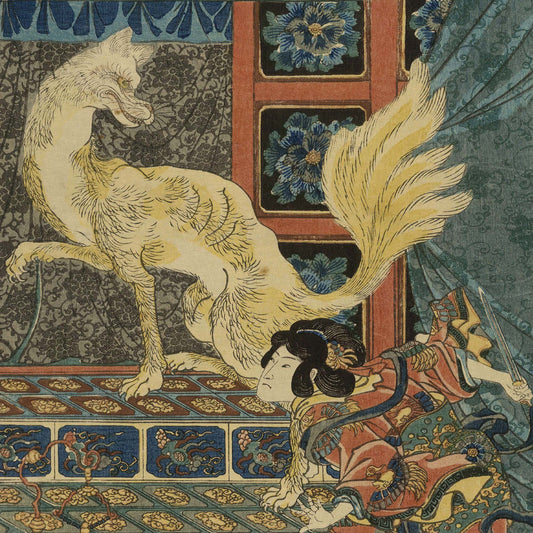
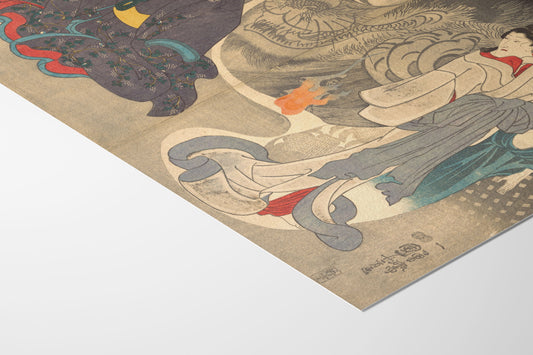
The Magic Fox of Three Countries (Lady Kayō Flies to the Eastern Sky) – Utagawa Kuniyoshi Print
Vendor:WallangoRegular price From $35.00Regular priceUnit price per -
The Magic Fox of Three Countries: China, Daji Bewitched at the Post Station – Utagawa Kuniyoshi Print
Vendor:WallangoRegular price From $35.00Regular priceUnit price per -
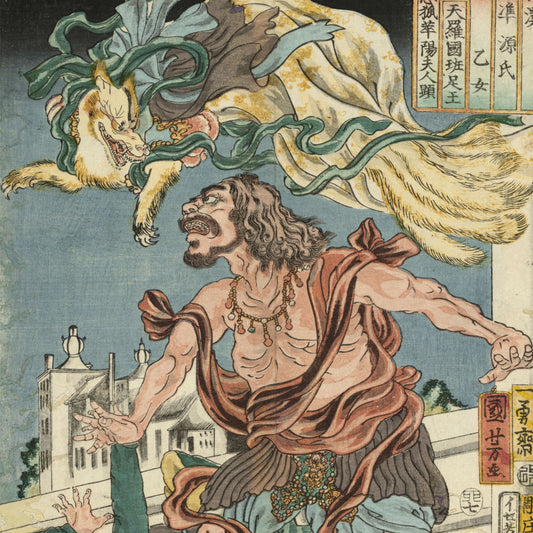
King Hanzoku and the Evil Fox Lady Kayō – Utagawa Kuniyoshi
Vendor:WallangoRegular price From $35.00Regular priceUnit price per -
The Sailor Tokuzō and the Umibōzu – Utagawa Kuniyoshi (c. 1845)
Vendor:WallangoRegular price From $35.00Regular priceUnit price per -
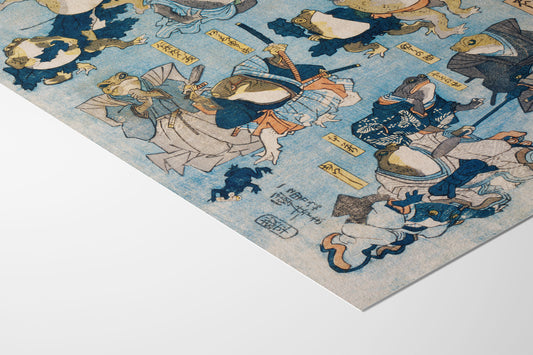
Famous Heroes of the Kabuki Stage Played by Frogs – Utagawa Kuniyoshi (c. 1840)
Vendor:WallangoRegular price From $35.00Regular priceUnit price per -
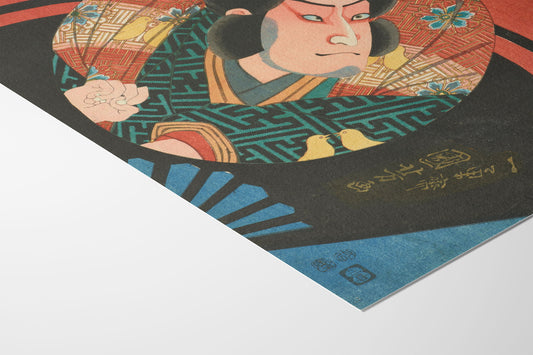
Kabuki Actor on a Folding Fan – Utagawa Kuniyoshi
Vendor:WallangoRegular price From $35.00Regular priceUnit price per -
The Ghost Cat – Utagawa Kuniyoshi (1840s)
Vendor:WallangoRegular price From $35.00Regular priceUnit price per -
Cats of the Tōkaidō, from Miya to Kyoto – Utagawa Kuniyoshi (c. 1847)
Vendor:WallangoRegular price From $35.00Regular priceUnit price per -
Ruan Xiaoqi, the Living King of Hell, Utagawa Kuniyoshi
Vendor:WallangoRegular price From $35.00Regular priceUnit price per











Utagawa Kuniyoshi, master of warriors and monsters
A pupil of Utagawa Toyokuni I, Kuniyoshi struggled for years before his breakthrough in the late 1820s with a series of heroes from the Chinese novel Suikoden, whose tattooed warriors still inspire Japanese tattoo art today, like Ruan Xiaoqi, the Living King of Hell. He became the great master of warrior prints, but his curiosity knew no limits: ghosts, legends, kabuki, satire, animals dressed as humans. His bold compositions, often spread across three sheets, and his sense of humour make him one of the most modern artists of the Edo period.
Japanese cat prints: Kuniyoshi’s cats
Kuniyoshi adored cats and kept many in his studio, and they appear everywhere in his work. In The Ghost Cat, a giant cat face looms over a haunted scene, while Cats of the Tōkaidō turns the fifty-three stations of the great Edo road into a parade of cats and puns. A Japanese cat print is the perfect gift for any cat lover, and a playful touch in a reading corner or a bedroom.


Yokai, foxes and sea monsters
Kuniyoshi drew some of the most spectacular monsters of Japanese art. In The Sailor Tokuzō and the Umibōzu, a giant black sea monk rises from the waves, and his Magic Fox of Three Countries follows the nine-tailed fox that bewitched the courts of India, China and Japan. Discover more creatures in our yokai art prints and our guide to Japanese yokai.


Kabuki and animal parodies
Kabuki actors were the stars of Edo, and Kuniyoshi portrayed them with flair, like the glaring actor of Kabuki Actor on a Folding Fan. He also loved to parody them: in Famous Heroes of the Kabuki Stage Played by Frogs, a troupe of frogs and toads acts out the great roles of the theatre, swords drawn, and in Octopus Games a family of octopuses plays at being human. These witty prints bring humour to a living room, a hallway or a child’s room.
Decorating with Kuniyoshi prints
Deep Prussian blue, black and bold reds dominate Kuniyoshi’s prints: they stand out on a white or pale wall and suit both Japandi and more eclectic interiors. A thin black or natural wood frame keeps the spirit of the original prints. His large scenes make striking statement pieces above a sofa or a bed, while smaller designs work well in pairs or as part of a Japanese gallery wall.
The heirs of Kuniyoshi
Kuniyoshi trained many artists. His most famous pupil, Tsukioka Yoshitoshi, carried his love of warriors and the supernatural into the Meiji era with prints like Minamoto and the Earth Spider and The Cry of the Fox. As a child, Kawanabe Kyōsai also spent time in his studio before becoming a master of demons, as in The Long-Tailed Demon.
Frequently asked questions
Are these original Kuniyoshi woodblock prints?
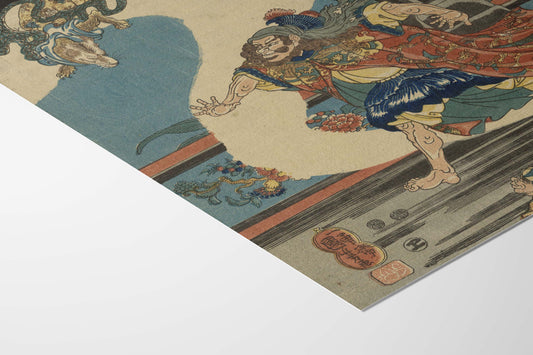
No. They are museum-quality reproductions, restored from high-definition scans of original prints and printed on thick matte archival paper. Original impressions are sold by specialist galleries and auction houses.
Which Kuniyoshi print for a living room?
The large, dramatic compositions such as the Umibōzu or the Magic Fox work best above a sofa, in 50×70 cm or larger. For a lighter mood, the frogs of the kabuki stage or the cats of the Tōkaidō are full of humour.
Which sizes are available?
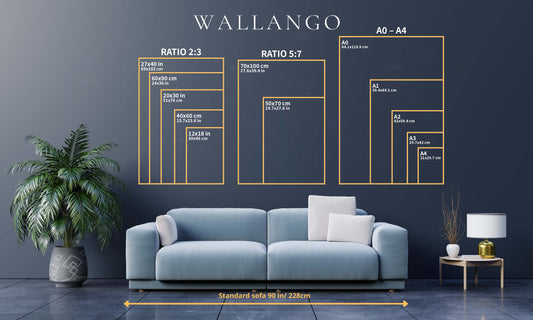
Every print comes in 13 sizes, from A4 to A0, including 40×60, 50×70, 60×90 and 70×100 cm and inch sizes, all made for standard frames. Shipping is free, with no minimum order.