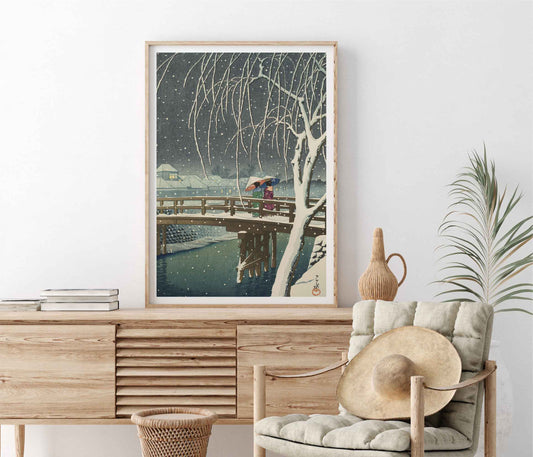
Japanese woodblock prints: three centuries of ukiyo-e
Ukiyo-e (浮世絵), literally “pictures of the floating world”, is one of the most influential art forms in history. Born in Edo-period Japan (1603–1868), Japanese woodblock prints captured the beauty of landscapes, the drama of kabuki theatre, the elegance of courtesans and the raw power of nature, through the meticulous craft of carved wooden blocks and water-based inks. The word ukiyo (浮世), with its Buddhist overtones, evokes the fleeting beauty of the earthly world: vibrant, ephemeral, deeply human.
Featured article: The History of Japanese Prints: from Ukiyo-e to Shin-hanga
The masters of Japanese printmaking
Katsushika Hokusai (1760–1849), whose Thirty-six Views of Mount Fuji, including the iconic Great Wave off Kanagawa, made the landscape print a worldwide icon.
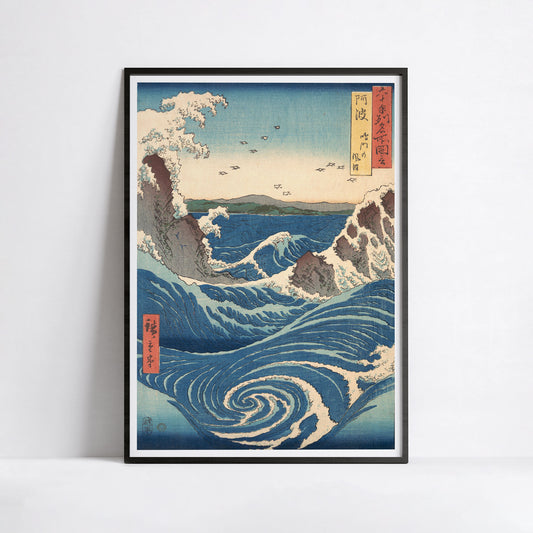
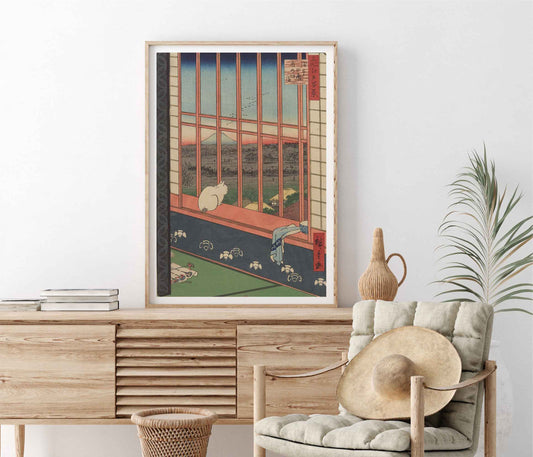
Utagawa Hiroshige (1797–1858), whose Fifty-three Stations of the Tōkaidō and One Hundred Famous Views of Edo redefined how light, weather and distance could be rendered in a woodblock print.
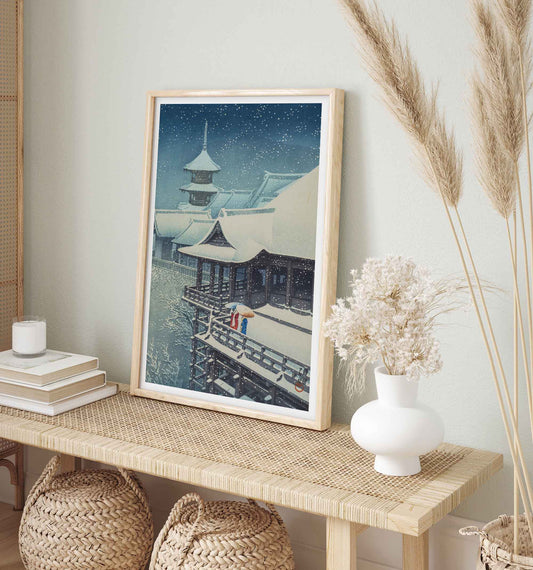
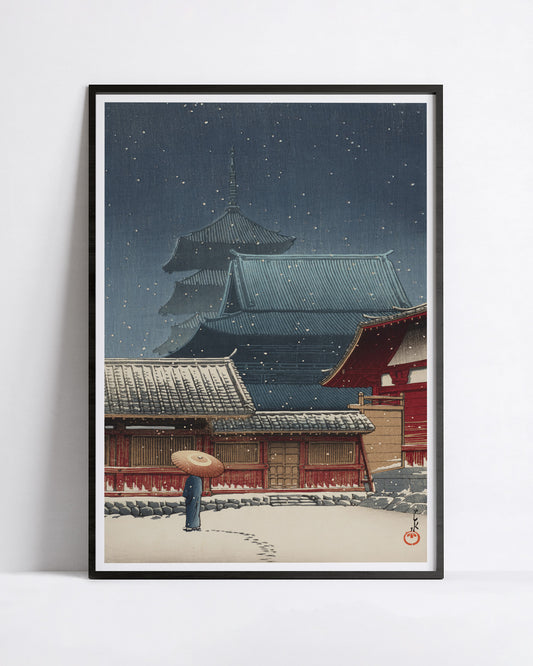
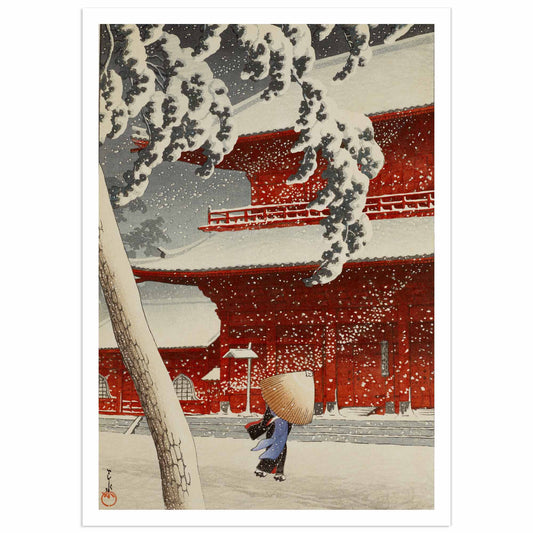
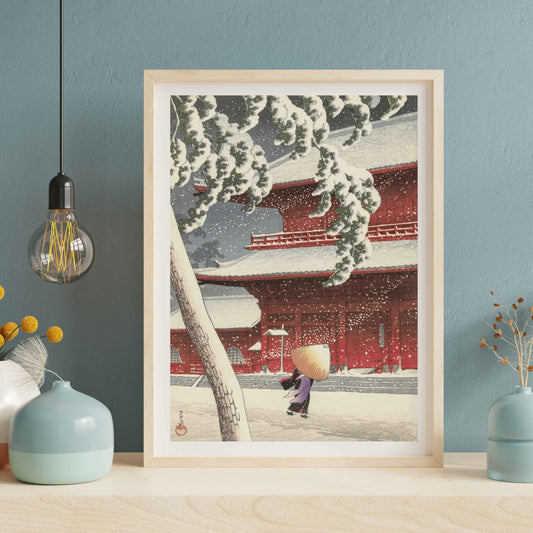
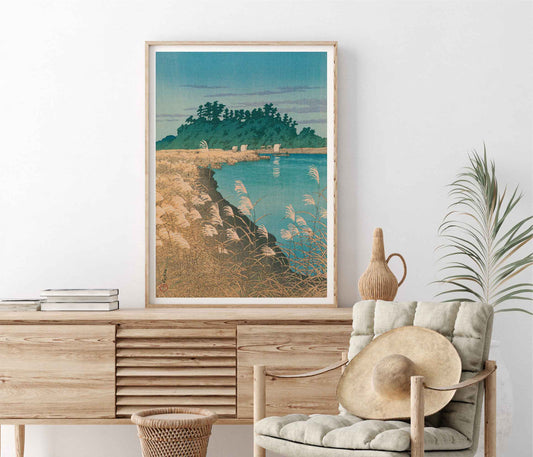
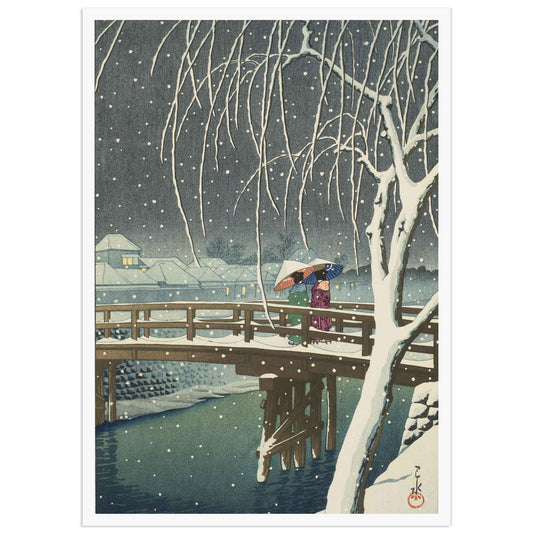
Kawase Hasui (1883–1957), the leading figure of the shin-hanga (“new prints”) movement, whose moonlit temples and snowy courtyards are held today by the Smithsonian and the British Museum.
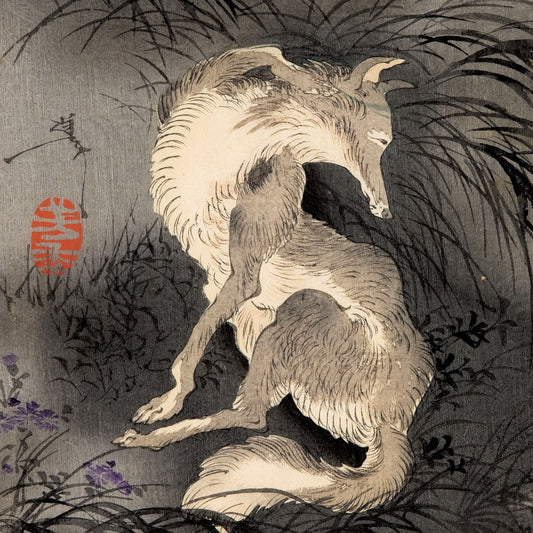
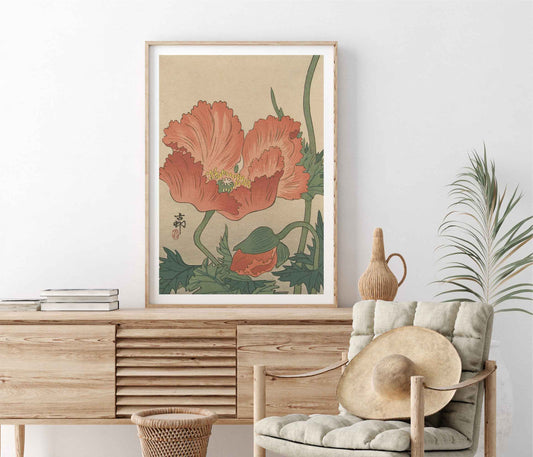
Ohara Koson (1877–1945), master of kachō-e (bird-and-flower prints), whose compositions combine naturalist precision and poetry.
Kawanabe Kyōsai (1831–1889), nicknamed the “demon of painting”, whose satirical frogs, skeletons and yōkai make him a forerunner of modern manga.
How a Japanese woodblock print is made
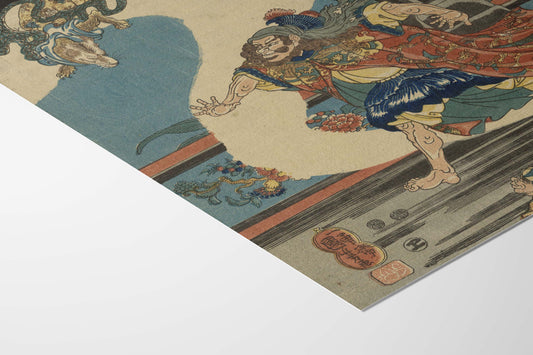
Each ukiyo-e print is the result of an extraordinary collaboration. The artist designs the composition; a master carver (horishi) transfers it onto several blocks of cherry wood, usually one per colour. A master printer (surishi) then brushes water-based pigments onto each block and prints them in perfect register on dampened washi paper, building the image layer by layer. A single print can require dozens of printing passes.
Printmaking explained by Kawase Hasui
The themes of Japanese prints
Ukiyo-e explored the full range of Edo culture: bijin-ga (portraits of beautiful women), yakusha-e (kabuki actor prints), meisho-e (famous places and travel scenes, from the Tōkaidō road to Mount Fuji), musha-e (samurai and warriors) and kachō-e (birds and flowers). In the early 20th century, the shin-hanga movement added a Western-influenced naturalism, with subtle atmospheric light and tonal depth, while keeping the traditional woodblock process.
Museum-quality Japanese art prints
Every print in our collection is made from an ultra-high-definition archival scan and printed in giclée on premium fine art paper with archival, fade-resistant inks, faithful to the colours, texture and atmosphere of the originals. Whether you are discovering ukiyo-e or building a collection, these Japanese art prints are made to last.
FAQ
Are these original Japanese woodblock prints?
No. They are high-quality reproductions printed on museum-grade paper, not hand-printed woodblock impressions. Original prints are sold by specialist galleries and auction houses.
What is the difference between ukiyo-e and shin-hanga?
Ukiyo-e is the art of the Edo period (17th–19th centuries). Shin-hanga, or “new prints”, revived it in the early 20th century with Western light and perspective, in the work of artists such as Kawase Hasui and Hiroshi Yoshida.
Follow Wallango on Instagram, YouTube and Facebook for artist stories and interior inspiration.