Waterhouse’s heroines: myths, poems and legends
John William Waterhouse (1849-1917) was born in Rome and trained at the Royal Academy Schools in London, where he became a full Royal Academician in 1895. Painting decades after the Pre-Raphaelite Brotherhood, he carried its love of poetry and legend into the 1900s, with a softer, more luminous brush. Each of his paintings tells a story at its most decisive moment. Read his full life in our article John William Waterhouse, artist of myth and emotion, and find his contemporaries in our Pre-Raphaelite art prints.
The Lady of Shalott and the heroines of English poetry
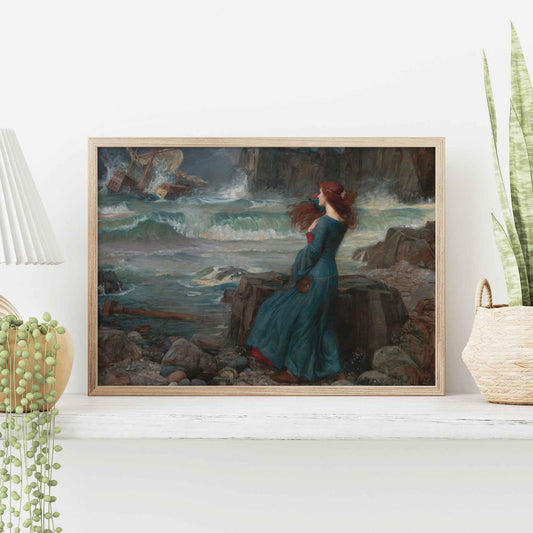
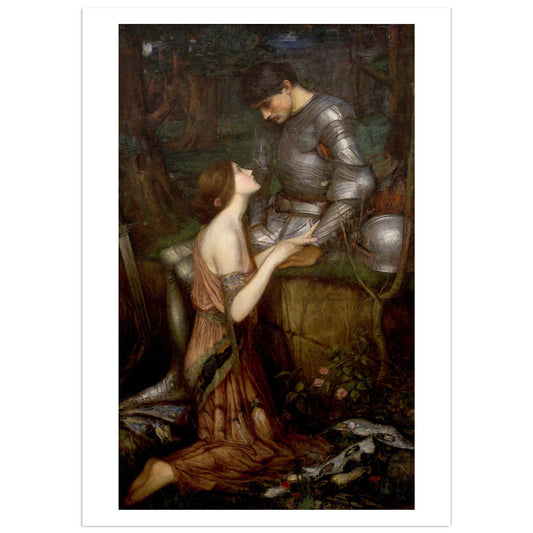
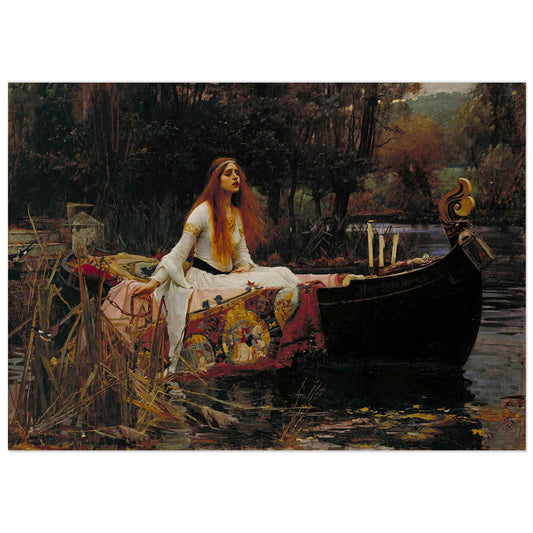
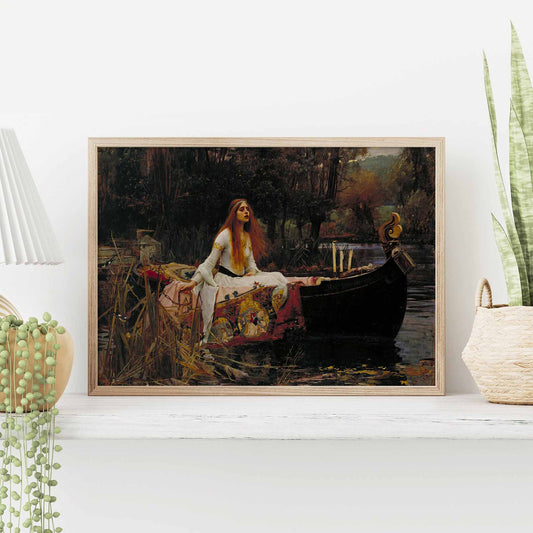
The Lady of Shalott (1888, Tate Britain) is his most famous painting: Tennyson’s heroine drifts down the river towards Camelot in her boat, the candles guttering, knowing that the curse will kill her. Waterhouse painted her three times over his career. Poetry inspired him again with Lamia (1905), after Keats, a kneeling enchantress looking up at a knight in armour, and Shakespeare with Miranda – The Tempest (1916), watching the shipwreck from the shore.
Greek myths: nymphs, gods and enchantresses
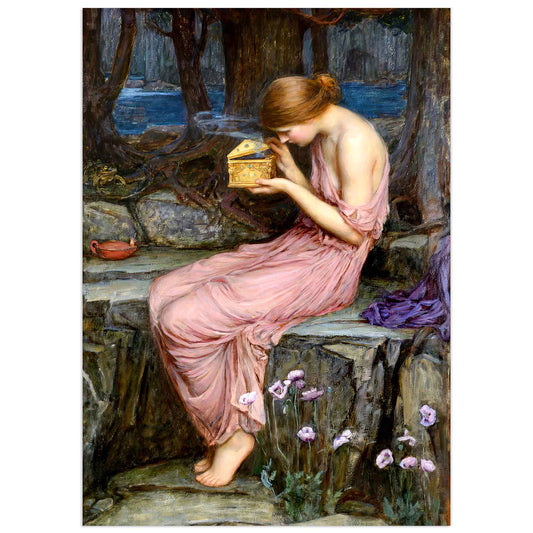
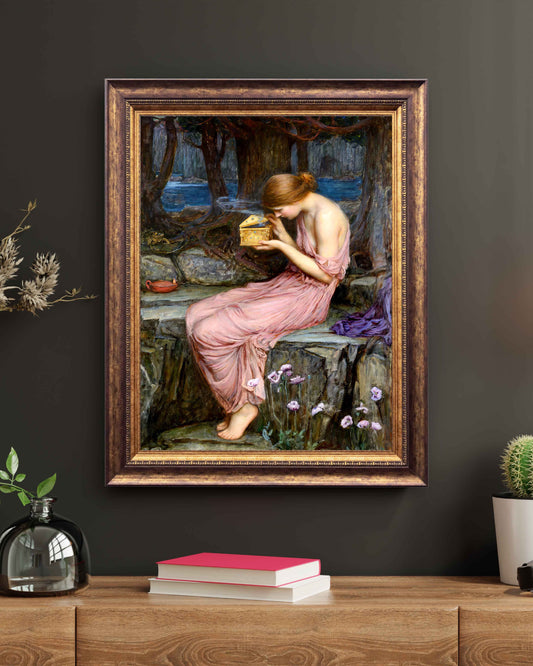
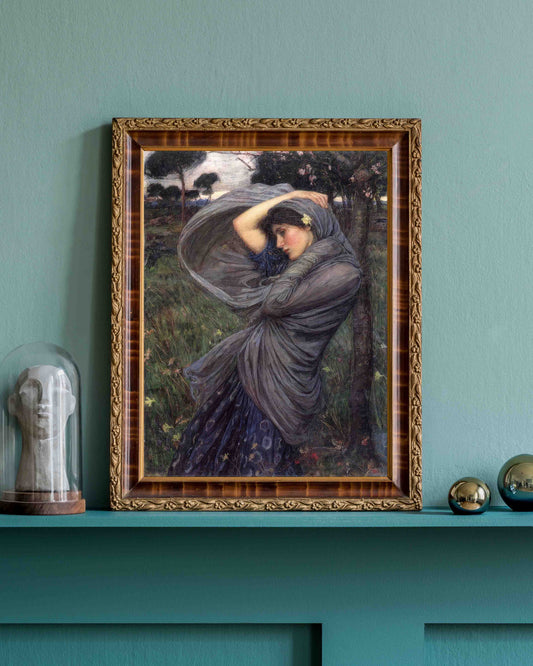
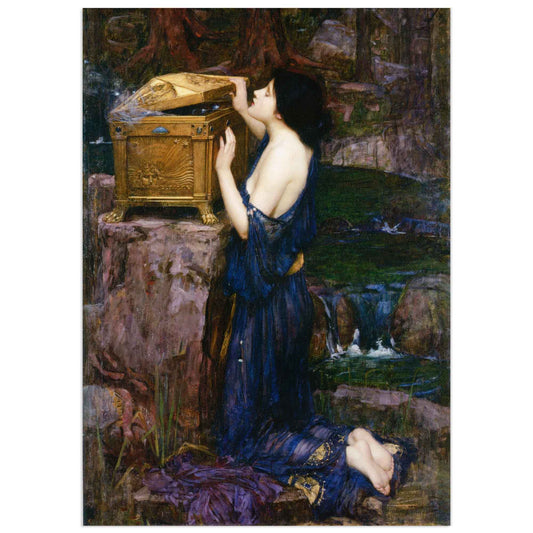
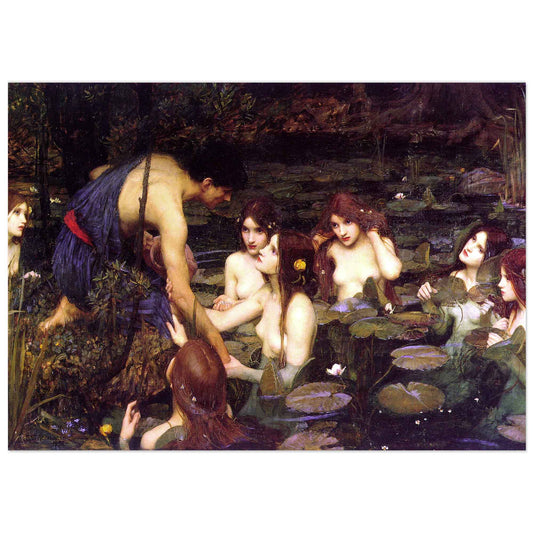
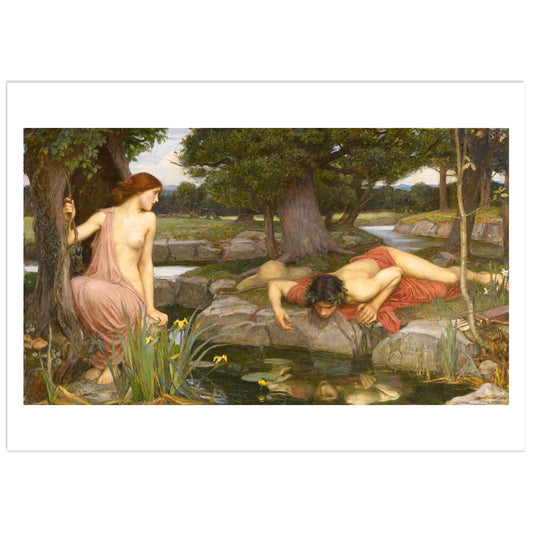
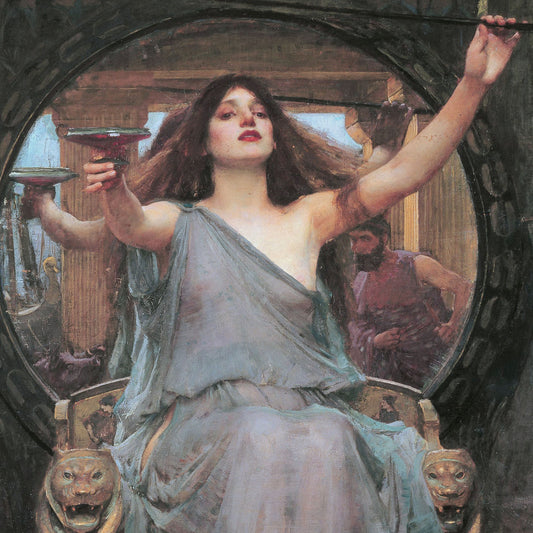
Greek mythology gave him his greatest scenes. In Hylas and the Nymphs (1896, Manchester Art Gallery), seven water nymphs draw the young Argonaut into a pool covered with water lilies. Echo and Narcissus (1903, Walker Art Gallery, Liverpool) shows the young man bent over his own reflection while the nymph Echo watches him in vain. Pandora (1896) and Psyche Opening the Golden Box (1903) catch two young women at the moment curiosity wins, Circe Offering the Cup to Ulysses (1891, Gallery Oldham) holds out her poisoned cup straight at the viewer, and Boreas (1903) shows a girl wrapped in her shawl by the north wind. More gods and heroes in our mythology wall art.
The Mermaid, Destiny and The Annunciation
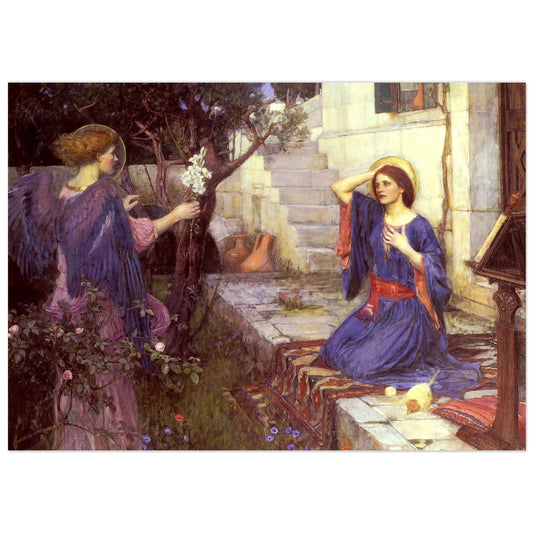
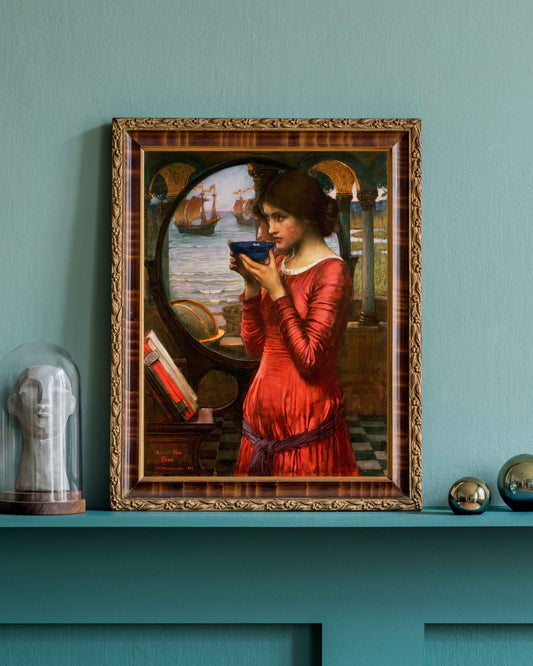
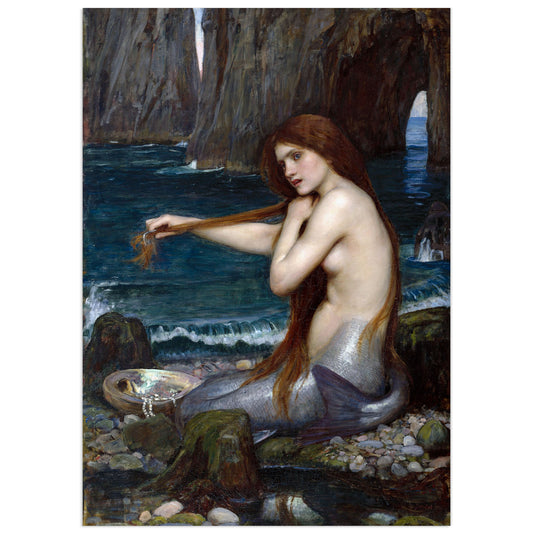
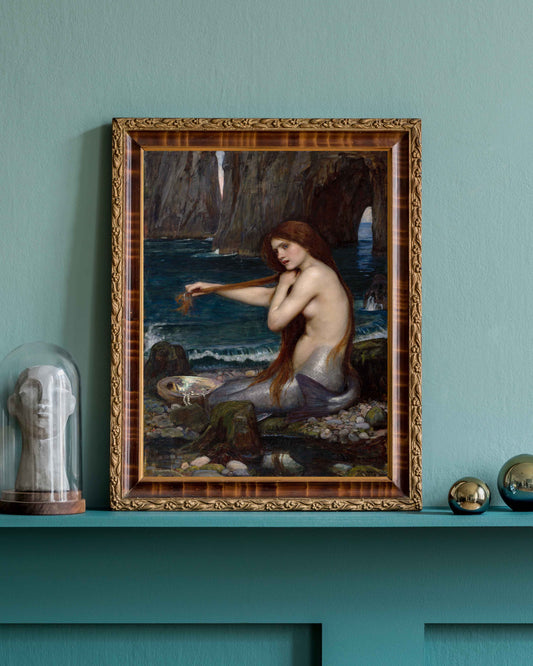
The Mermaid (1900), combing her hair on the rocks, was the diploma work he gave the Royal Academy on his election, and is still in its collection; it pairs beautifully with Edmund Dulac’s Little Mermaid. Destiny (1900, Towneley Hall, Burnley), a young woman raising a cup at a window, and The Annunciation (1914) show a quieter, more inward side of his art.
Waterhouse prints for your walls
His deep greens, warm reds and luminous skin tones suit a bedroom, a living room or a library. Every print is available in 13 sizes, from A4 to A0, on thick matte archival paper. Free shipping, no minimum order. Shipped rolled in a sturdy tube.
Questions about John William Waterhouse
Was Waterhouse a Pre-Raphaelite?
Not a member of the Brotherhood, founded in 1848, the year before he was born, but its heir: he took up its literary subjects and its taste for medieval and mythological heroines, painted with the techniques of the Royal Academy. He is often called the last of the Pre-Raphaelites.
What is his most famous painting?
The Lady of Shalott of 1888, at Tate Britain, followed by Hylas and the Nymphs in Manchester.
Where can I see his paintings?
At Tate Britain in London, Manchester Art Gallery, the Walker Art Gallery in Liverpool, Gallery Oldham and the Royal Academy, as well as in museums in Australia and Canada and in many private collections.