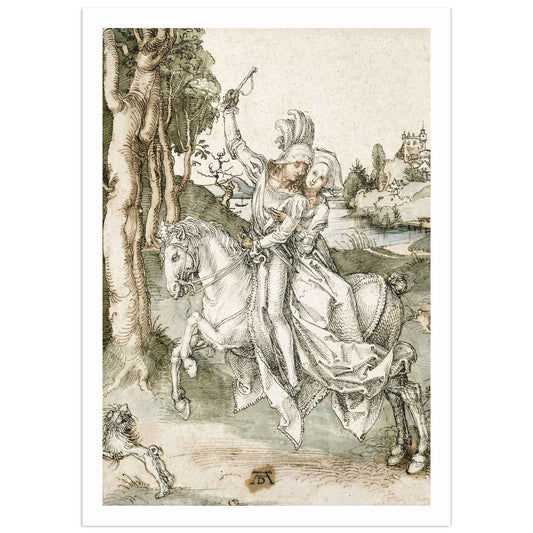
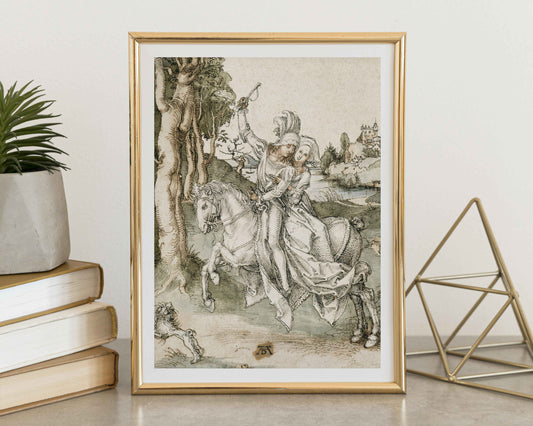
Albrecht Dürer Prints – Watercolors and Nature Studies
Albrecht Dürer (1471–1528) is best known for his engravings, but his watercolours are among the most quietly radical works of the Renaissance. While his contemporaries used watercolour as a sketching tool, Dürer treated it as a finished medium — and what he made with it changed the relationship between European art and the natural world.
This collection brings together reproductions of his finest nature studies: animals, insects, plants, and birds observed with a precision that would not be matched until the invention of scientific illustration a century later.
Young Hare, Stag Beetle, Little Owl — The Nature Studies
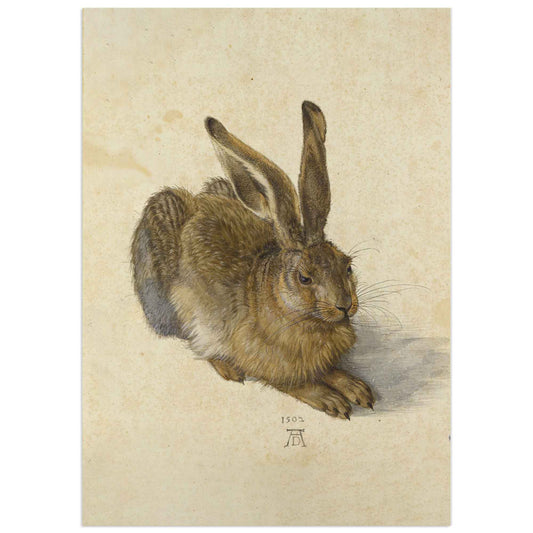
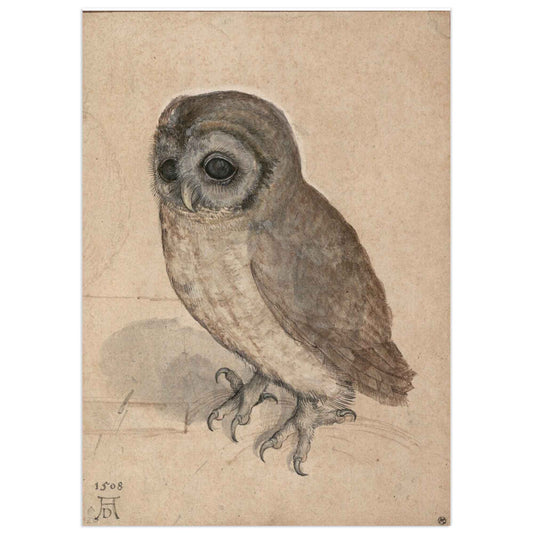
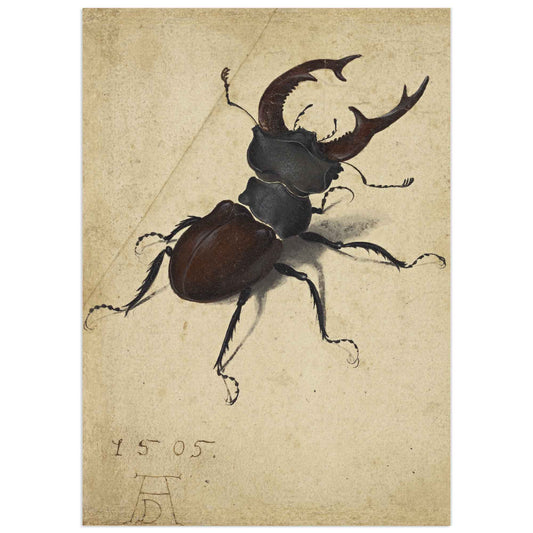
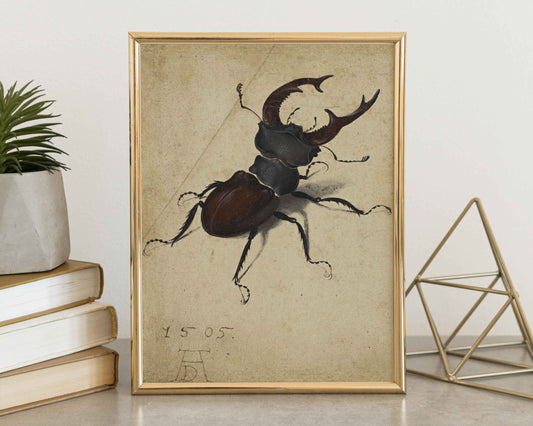
The Young Hare (1502) is probably Dürer's single most recognised work outside his engravings — a common brown hare rendered fur by fur, whisker by whisker, with both scientific accuracy and unmistakable tenderness. The Stag Beetle (1505) applies the same scrutiny to an insect that most of his contemporaries wouldn't have considered a worthy subject. The Little Owl (1506) captures a bird in repose with the same attention Dürer gave to portraits of the powerful.
These weren't decorative studies. They were arguments about what art was for.
The Large Piece of Turf and Botanical Works
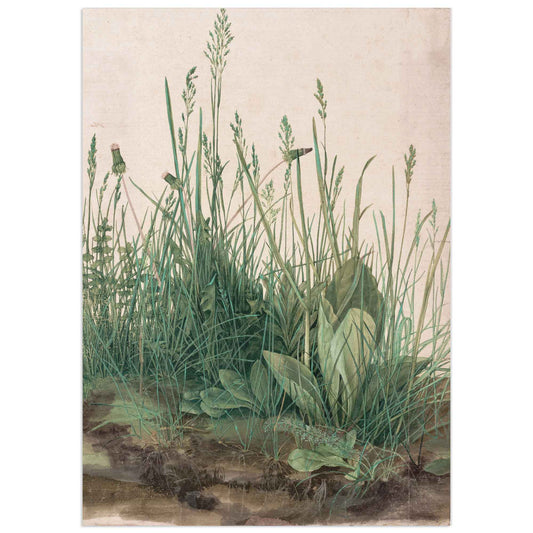
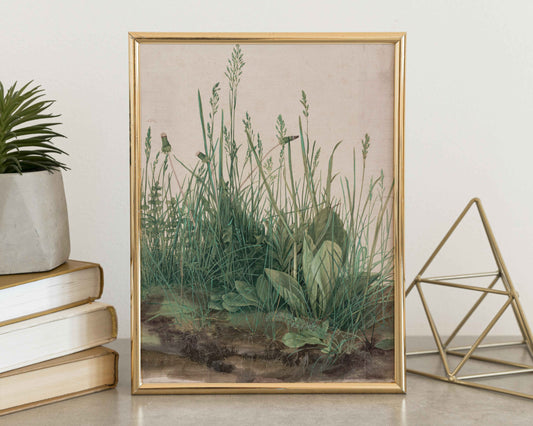
In 1503, Dürer painted a patch of wild grass and weeds — dandelions, plantain, yarrow — at ground level, from the perspective of something small enough to live inside it. The Large Piece of Turf is one of the first pure nature paintings in Western art, and one of the strangest. Nothing happens in it. Everything is observed. Its influence on botanical illustration, on landscape painting, and on the very idea of the natural world as a subject worthy of sustained attention is incalculable.
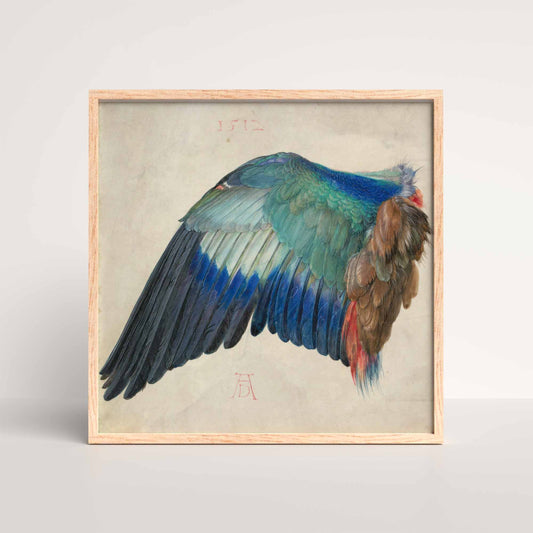
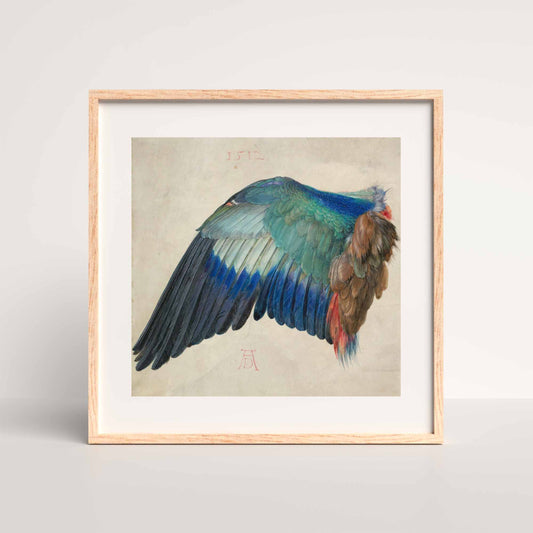
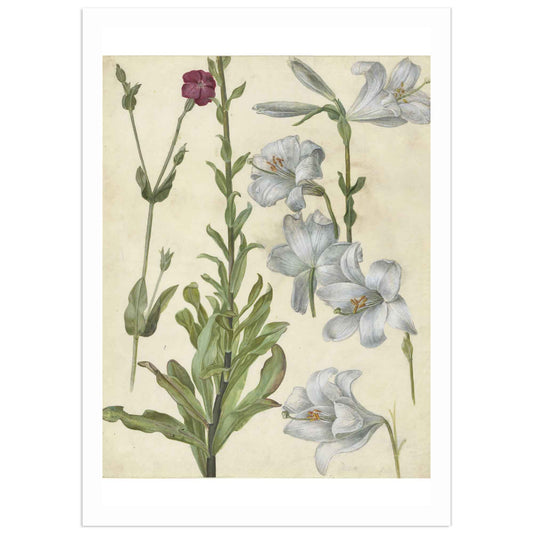
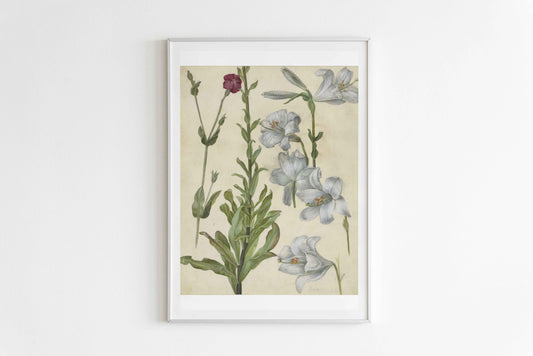
His botanical works — the Wing of a European Roller, Catchfly and Lilies — carry the same spirit: close, patient, free of hierarchy.
Museum-Quality Dürer Reproductions, Ready to Frame
All prints in this collection are reproduced on thick archival paper using inks calibrated to preserve the transparency and luminosity of Dürer's original watercolours — the soft greys of the hare's fur, the iridescent blue of the roller's wing. Shipped in a rigid protective tube.
Mini FAQ
What is Albrecht Dürer's most famous watercolor?
The Young Hare (1502), held at the Albertina in Vienna, is Dürer's most recognised watercolour and one of the most reproduced images in Western art history.
Where are Dürer's watercolors held?
The largest collection is at the Albertina Museum in Vienna, which holds the Young Hare, Large Piece of Turf, Wing of a European Roller, and many other studies. Additional works are held at the British Museum and major German museums.
Are Dürer watercolor prints good for interior decoration?
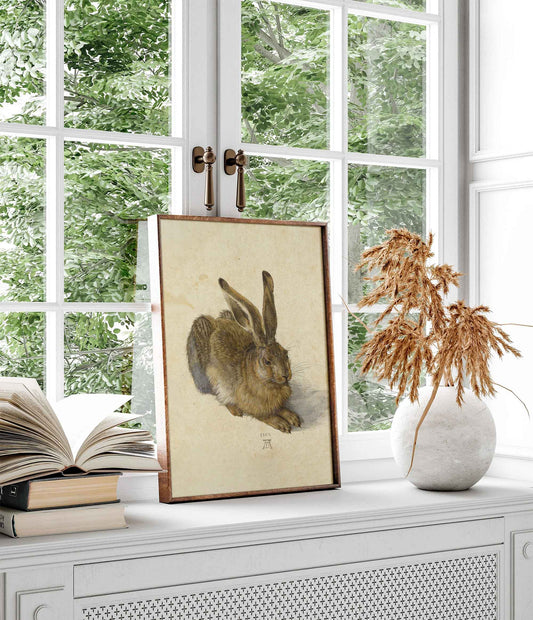
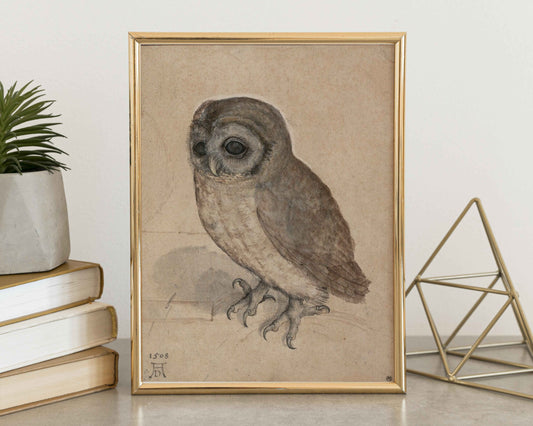
Dürer's nature studies work beautifully in modern, minimalist interiors — their neutral palettes, precise composition, and quiet authority make them strong standalone pieces or ideal anchors for a natural history gallery wall.