
-
The Great Wave off Kanagawa Poster – Hokusai
Vendor:WallangoRegular price From $52.00Regular priceUnit price per -
Mishima Pass in Kai Province – Katsushika Hokusai
Vendor:WallangoRegular price From $52.00Regular priceUnit price per -
Thunderstorm Beneath the Summit – Katsushika Hokusai
Vendor:WallangoRegular price From $52.00Regular priceUnit price per -
Umezawa Manor in Sagami Province – Katsushika Hokusai
Vendor:WallangoRegular price From $52.00Regular priceUnit price per -
Sumida River in the Snow – Hokusai Japanese Poster
Vendor:WallangoRegular price From $52.00Regular priceUnit price per -
Koi Carp – Hokusai Limited Edition Fine Art Print (Numbered, 50 Copies)
Vendor:WallangoRegular price $185.00Regular priceUnit price per -
Mount Fuji in Blue (Umezawa Manor) – Hokusai Poster
Vendor:WallangoRegular price From $52.00Regular priceUnit price per -
Red Fuji (South Wind, Clear Sky) – Hokusai Poster
Vendor:WallangoRegular price From $52.00Regular priceUnit price per -
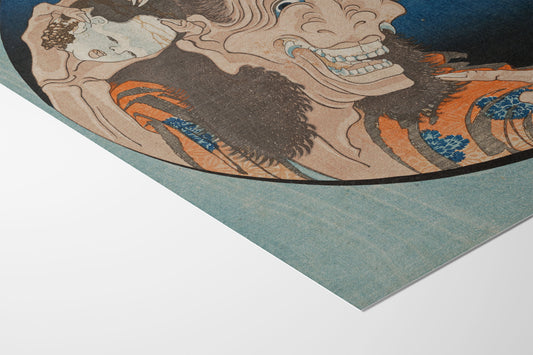
The Laughing Demoness (Warai-hannya) – Katsushika Hokusai (c. 1831)
Vendor:WallangoRegular price From $52.00Regular priceUnit price per -
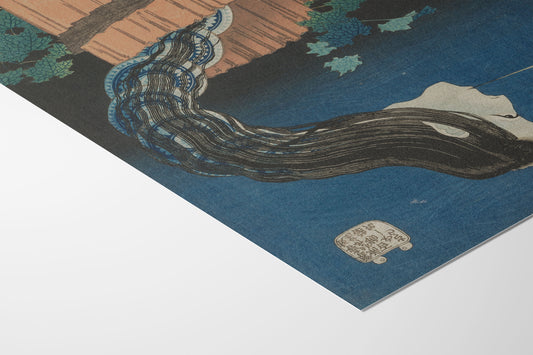
The Ghost of Okiku (Sara-yashiki) – Katsushika Hokusai (c. 1831)
Vendor:WallangoRegular price From $52.00Regular priceUnit price per -
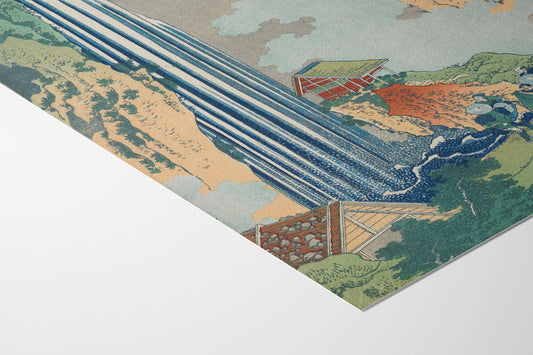
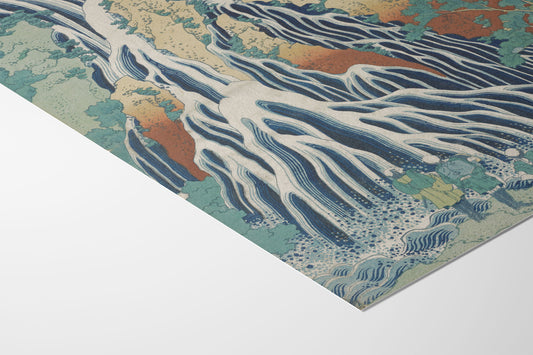
The Waterfall at Ono on the Kisokaidō Road – Katsushika Hokusai (c. 1832)
Vendor:WallangoRegular price From $52.00Regular priceUnit price per -
Kirifuri Waterfall at Mount Kurokami in Shimotsuke Province – Katsushika Hokusai (c. 1832)
Vendor:WallangoRegular price From $52.00Regular priceUnit price per

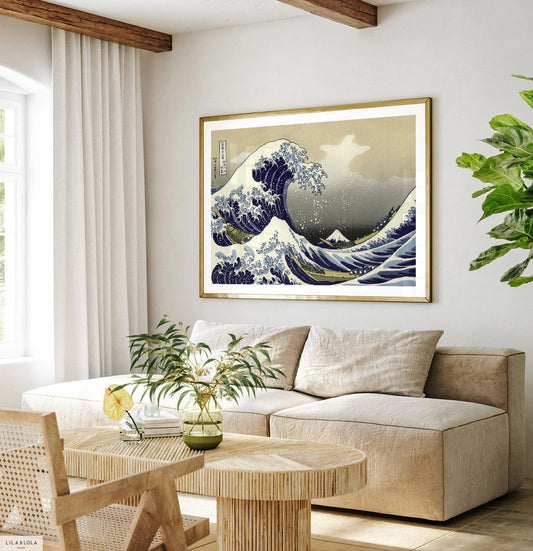





Hokusai prints: The Great Wave and beyond
Katsushika Hokusai (1760–1849) is the best-known Japanese artist in the world, and his prints have lost none of their power. The Great Wave off Kanagawa (c. 1831), with its claw of water towering over three fishing boats and a tiny Mount Fuji, is only one moment in a career that lasted seventy years. Monet collected his prints, Van Gogh wrote about the Great Wave to his brother, and Debussy chose it for the cover of La Mer in 1905.


Mount Fuji prints from the Thirty-six Views
In his series Thirty-six Views of Mount Fuji (c. 1830–1832), Hokusai shows the sacred mountain from every angle and in every weather. Red Fuji glows at dawn under a sky of small clouds, Thunderstorm Beneath the Summit strikes lightning at its foot, and Mishima Pass sets travellers around a giant tree. The new Prussian blue pigment, then newly affordable in Japan, gives these landscapes their depth, as in Mount Fuji in Blue.
Hokusai ghost prints: Okiku and the Laughing Demoness
Hokusai was also a master of the strange. In his series One Hundred Ghost Stories (c. 1831), the ghost of Okiku rises from a well as a neck of plates, and the Laughing Demoness grins over a child’s head. For more Japanese monsters, see our yokai art prints.


Snow, rivers and koi: quieter Hokusai art prints
Beyond the famous waves, Hokusai drew the calm of a Sumida River in the snow and the shimmering scales of Koi Carp, offered as a limited edition of 50 numbered prints. These softer images suit a bedroom or a reading corner.
Decorating with a Hokusai poster
Strong lines, flat areas of colour and deep blues make Hokusai prints easy to live with, in a modern interior as in a traditional one. The Great Wave makes a statement above a sofa in 50×70 cm or larger; two or three Fuji views hung in a row form a coherent series. A thin black or natural oak frame keeps the spirit of the original woodblock prints.
Frequently asked questions
What is Hokusai most famous for?
The Great Wave off Kanagawa (c. 1831), from his Thirty-six Views of Mount Fuji. He is also known for his Manga sketchbooks, his waterfalls and his ghost prints, which influenced Impressionism and Art Nouveau.
Are these original Hokusai woodblock prints?
No. They are museum-quality reproductions restored from high-definition scans of original prints and printed on thick matte archival paper. Original impressions are sold by specialist galleries and auction houses.
Which size for a Great Wave poster?
All prints come in sizes made for standard frames, from A4 to A0. For a living room wall, 50×70 cm or 60×90 cm gives the wave its full impact. Shipping is free, with no minimum order.