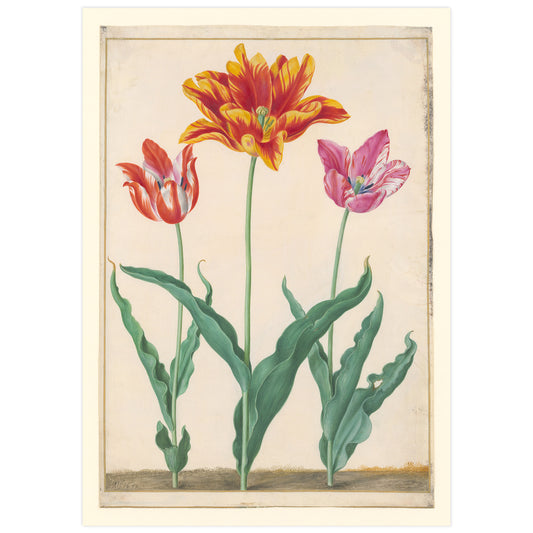
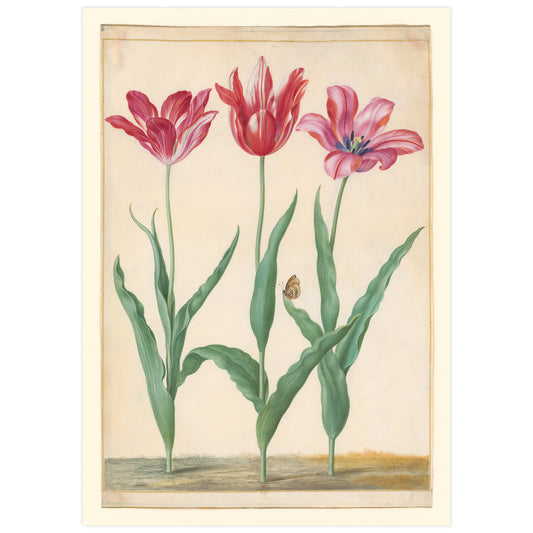
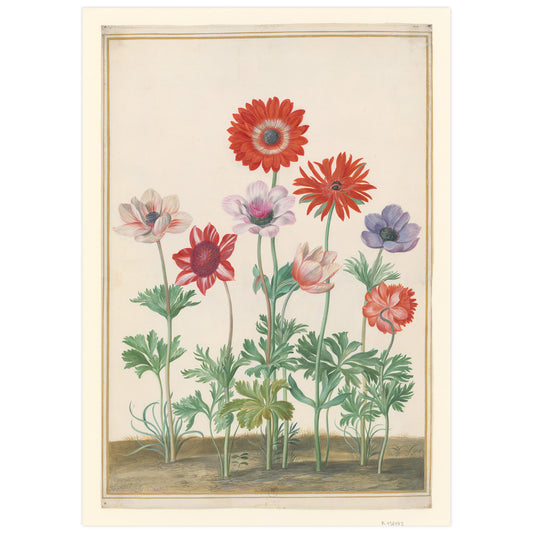
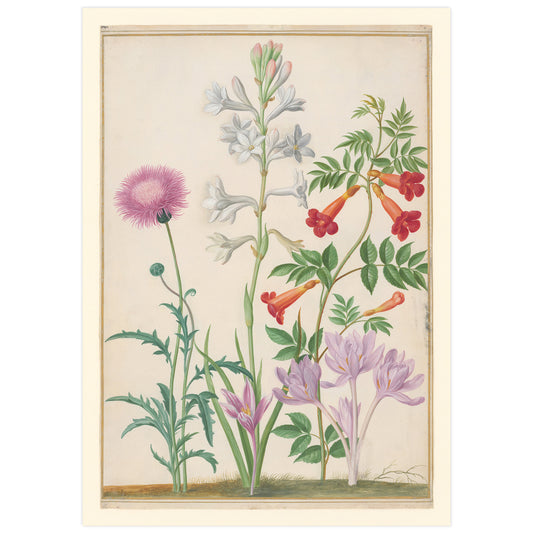
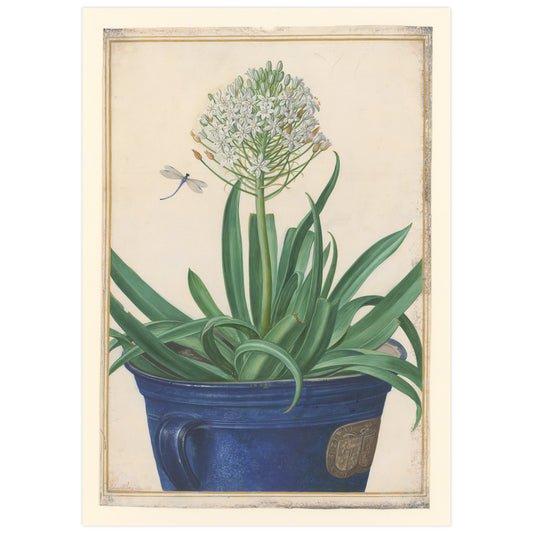
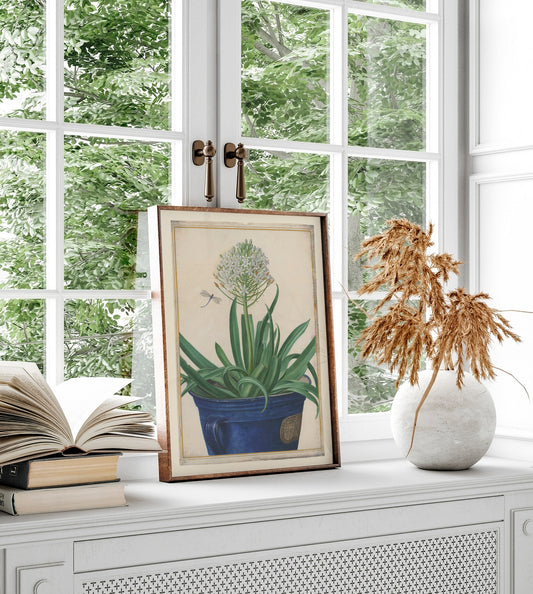
Botanical art prints — why decorate your walls with them?
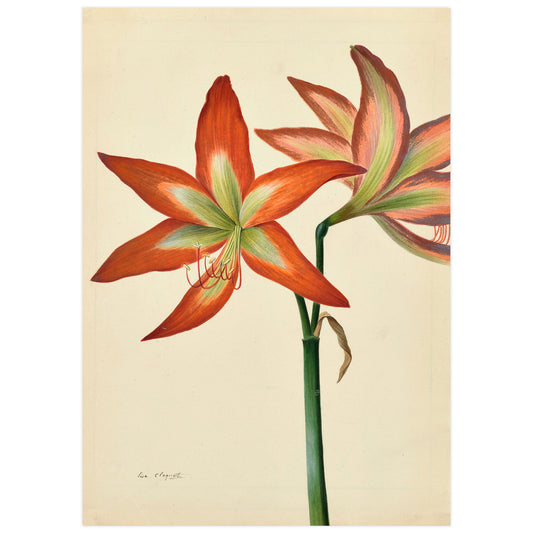
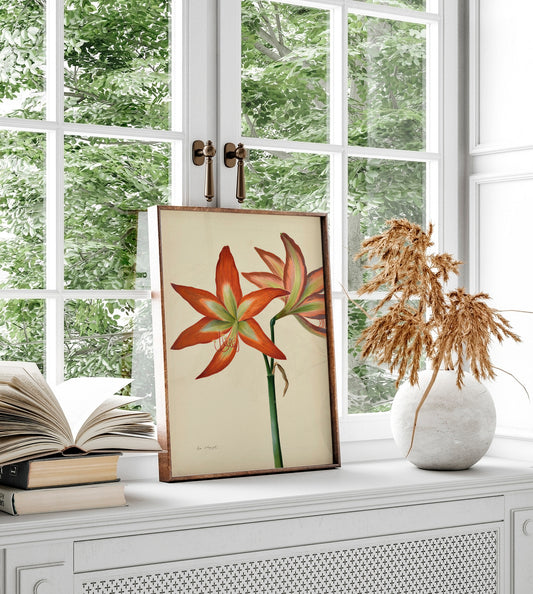
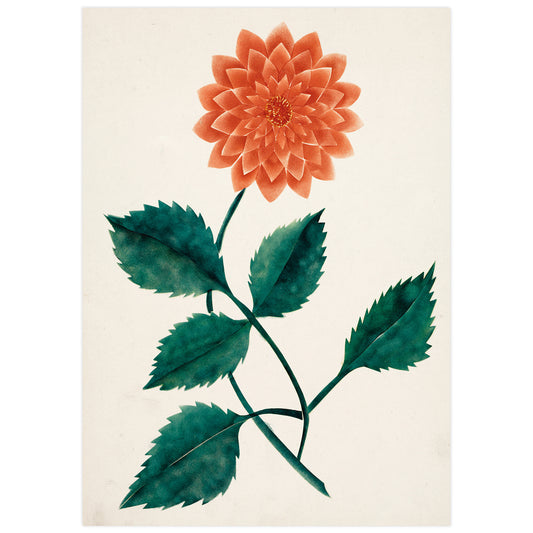
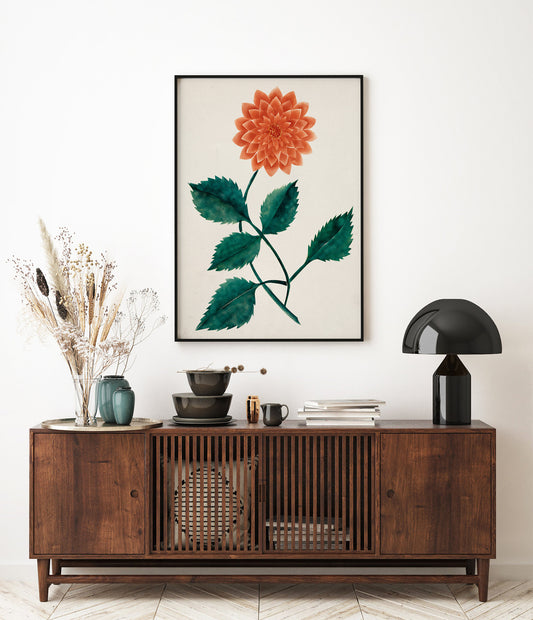
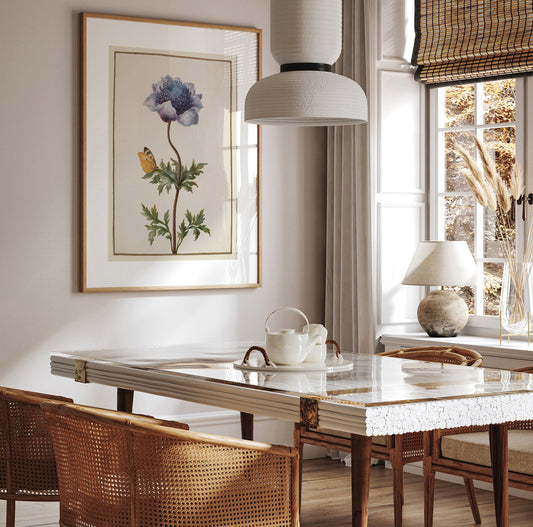
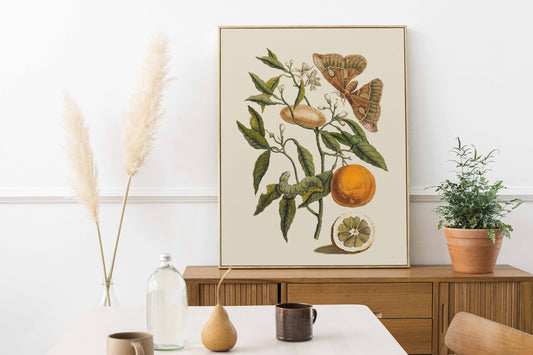
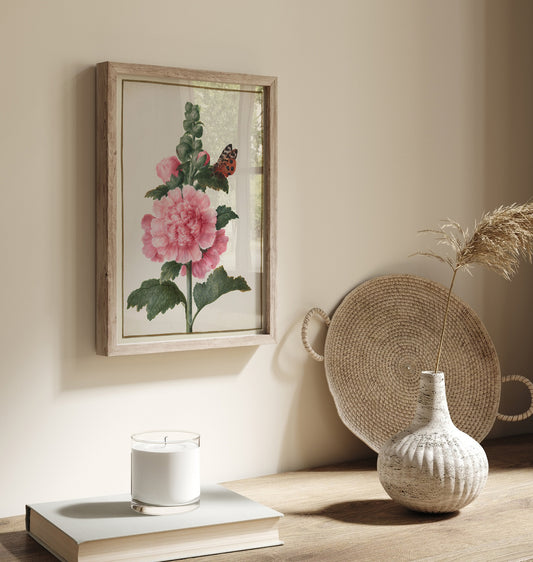
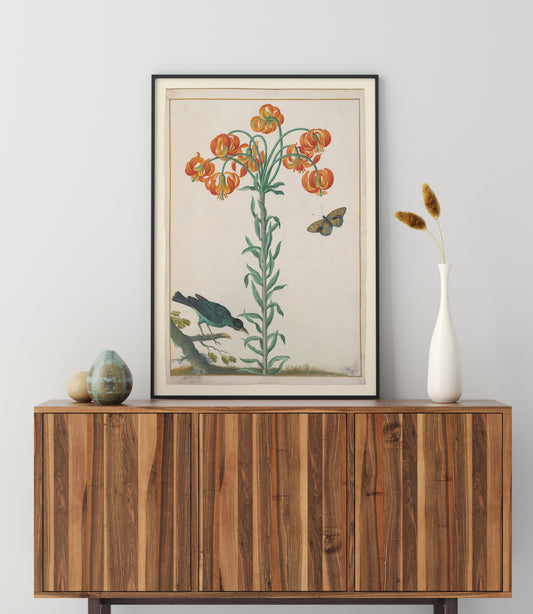
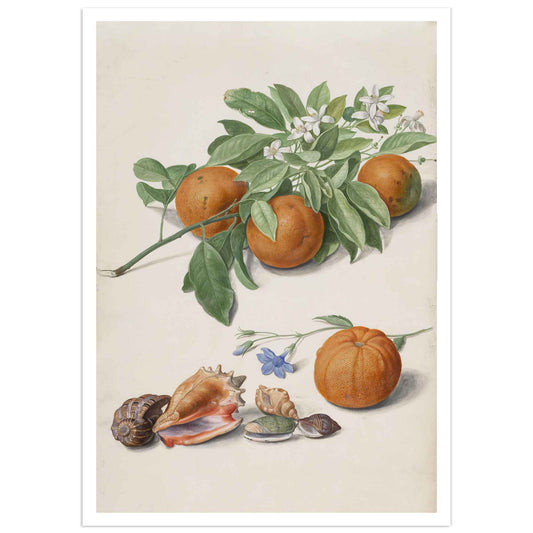
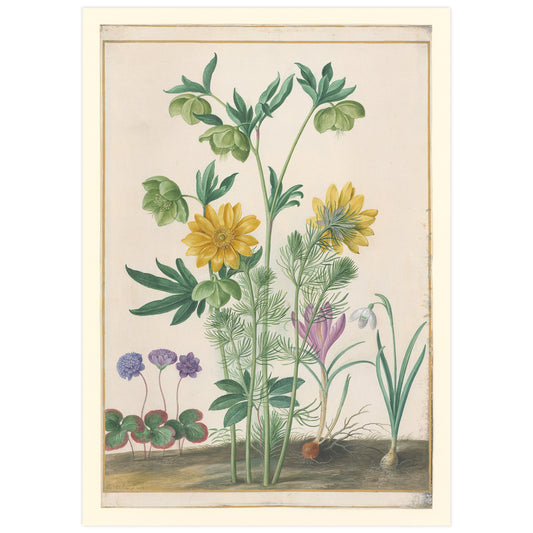
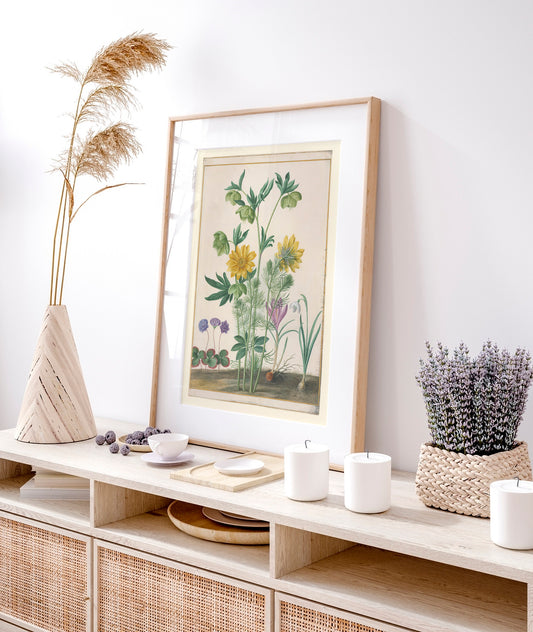
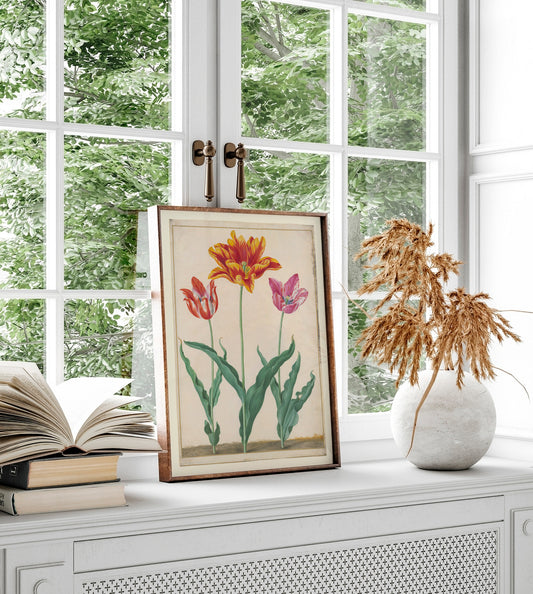
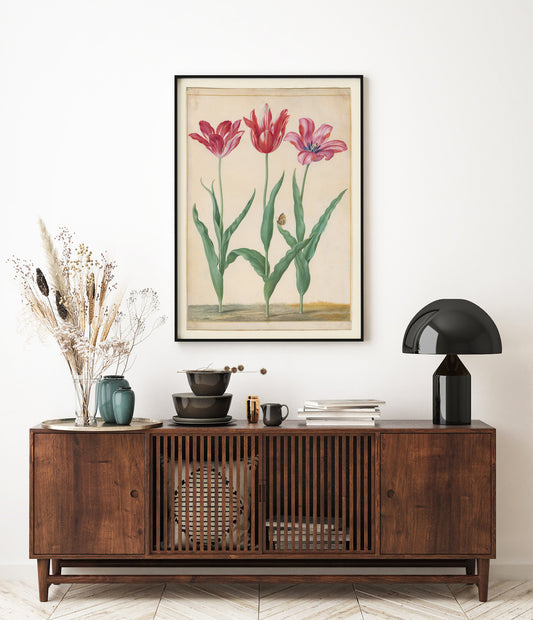
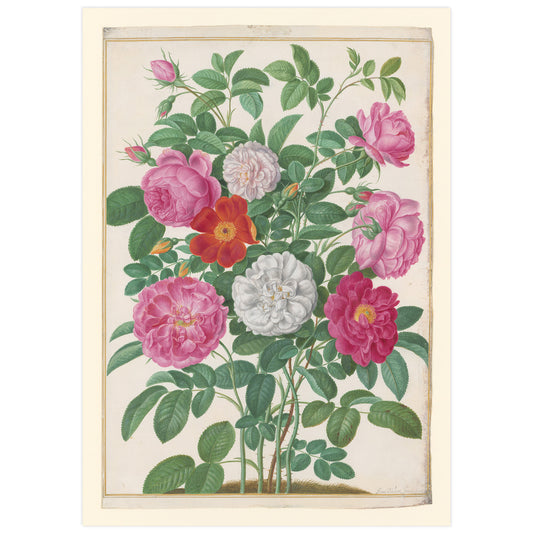
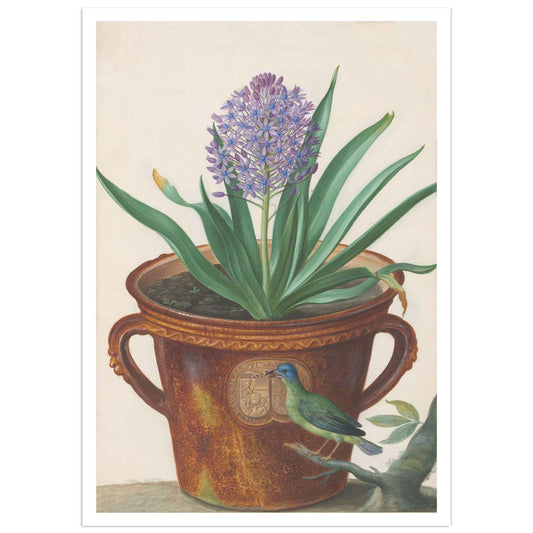
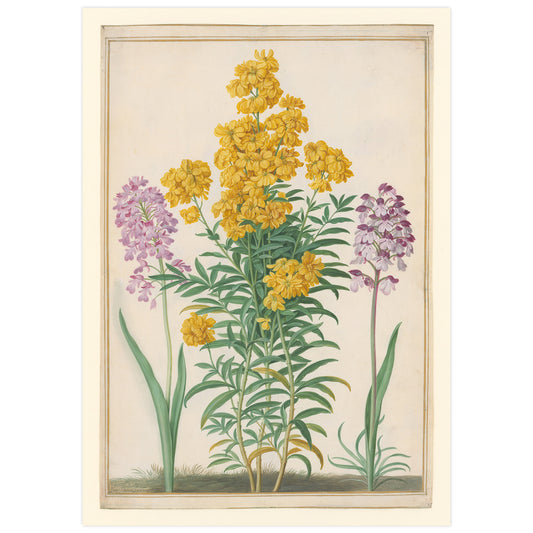
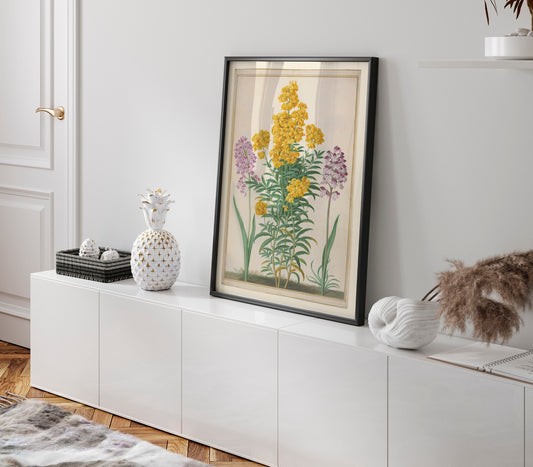
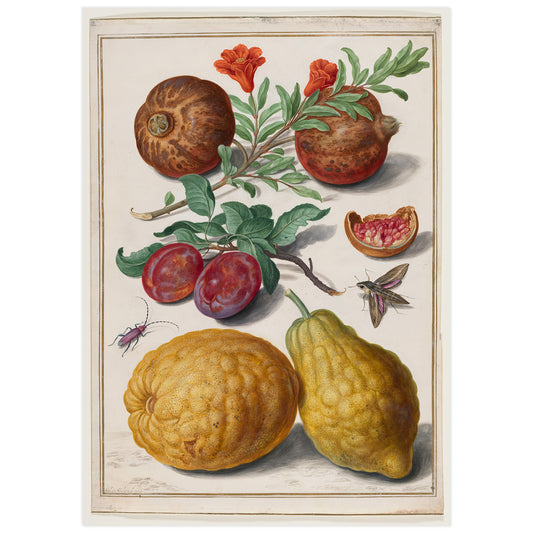
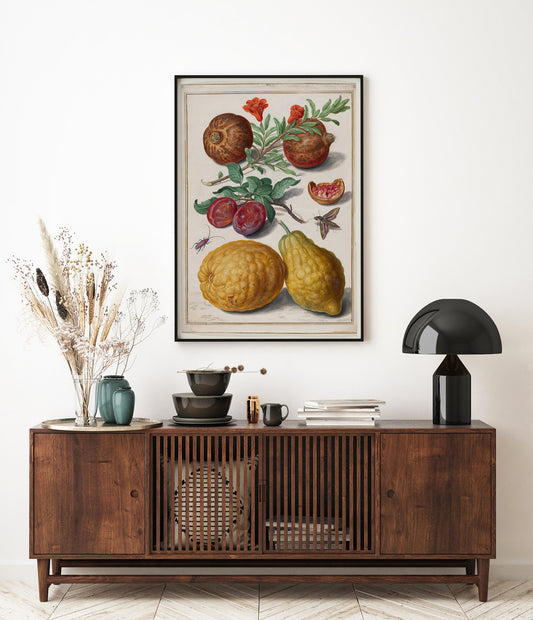
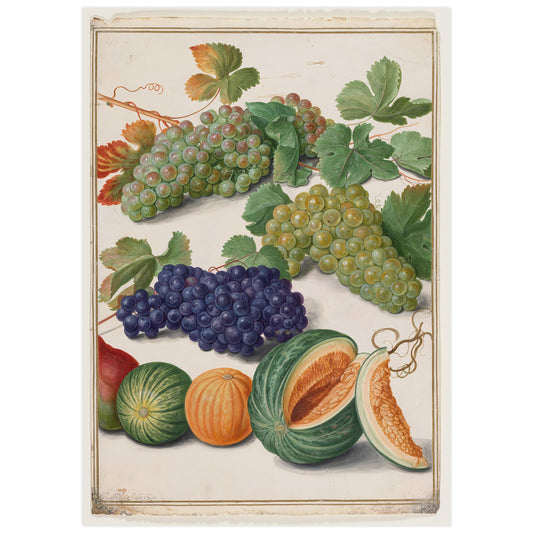
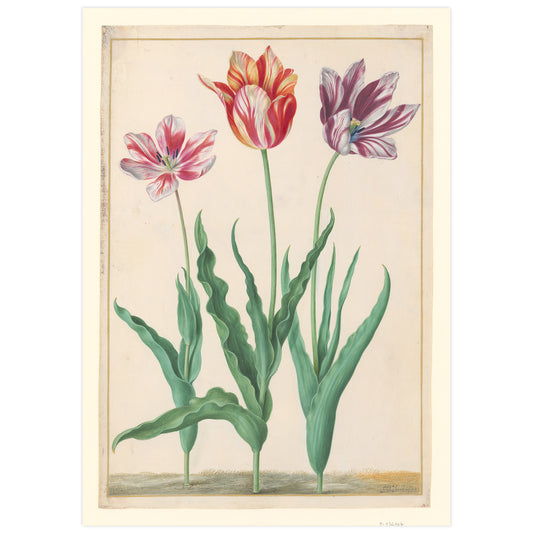
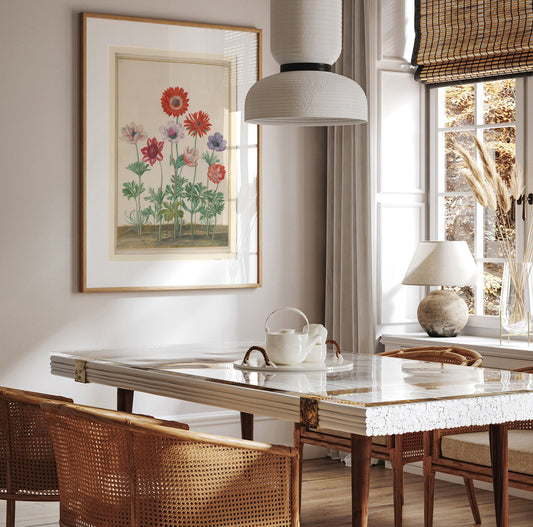
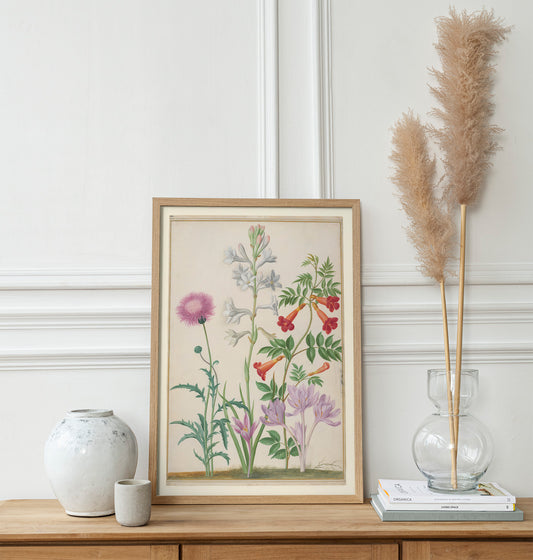
Botanical prints work in any interior — living room, bedroom, kitchen, home office. Their soft palette and intricate details bring a timeless elegance that few other decorative styles can match. Unlike passing trends, botanical illustration has been captivating eyes for centuries without ever going out of style. All our prints are available from A4 to A0, in inches and centimeters, compatible with standard off-the-shelf frames.
A brief history of botanical illustration
Botanical illustration — the art of representing plants, trees and flowers — dates back to Antiquity. For centuries, poets, philosophers, scientists and artists have been drawn to the plant world, both for its therapeutic properties and its beauty, attributing symbolic and sometimes magical powers to it.
From treatises on medicinal plants to grand ornamental florilegia, the diversity of forms, the shimmer of colours and the infinite detail of the botanical world never cease to astonish. The oldest known botanical representations belong to Ancient Egypt, which made the papyrus plant a powerful symbol of fertility and rebirth. The first true botanical illustrations come from Ancient Greece — the Vienna Dioscorides is a codex featuring over 400 remarkably naturalistic drawings of plants and animals.
Fascinated by natural history plates? Read our article on the pioneers of naturalist illustration.
The great names of botanical illustration
No list of botanical illustrators can ever be complete — each artist must be considered on their own terms, whether their ambitions were scientific, artistic, or both. Here are the key figures represented in our collection.
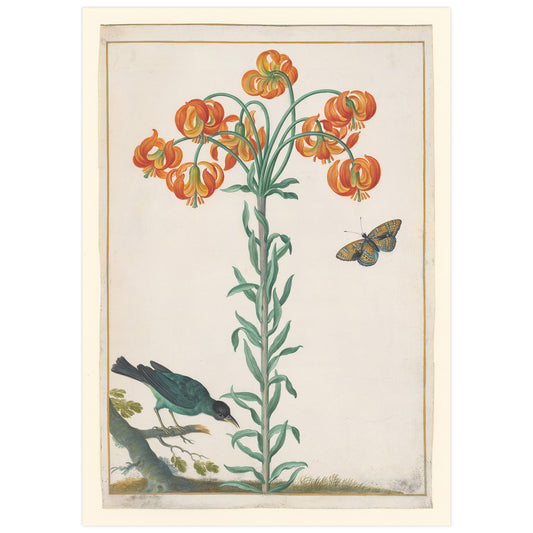
Joris Hoefnagel (1542–1600) — Flemish engraver renowned for his meticulously detailed illustrations of plants, animals and insects. One of the first artists to elevate naturalist illustration to the status of fine art.
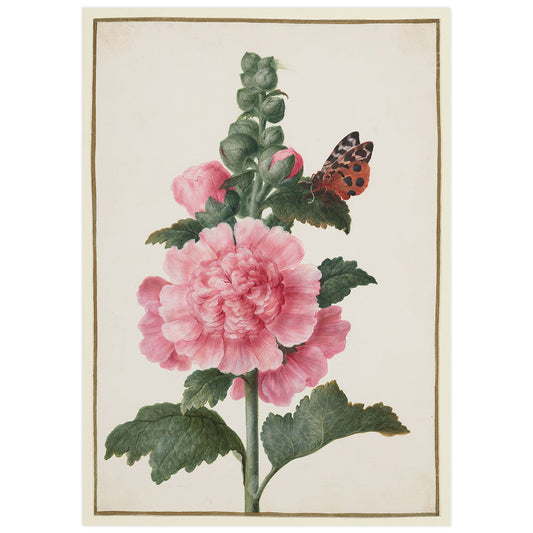
Johann Walter (1604–1677) — Painter from Strasbourg and author of the Nassau Florilegium, one of the most beautiful botanical compendiums of the 17th century. His plates combine scientific rigour with painterly sensitivity in a rarely achieved balance.
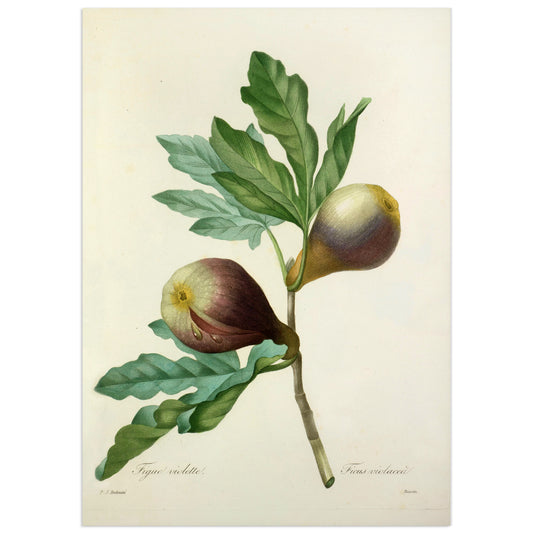
Pierre-Joseph Redouté (1759–1840) — Known as "The Raphael of Flowers", Redouté is the most celebrated botanical illustrator in history. His roses and lilies, painted for the French court, remain among the most reproduced botanical images in the world.
William Morris (1834–1896) — British artist and designer, central figure of the Arts and Crafts movement. Morris transformed botanical illustration into decorative pattern of remarkable modernity, influencing textiles, wallpaper and design to this day.
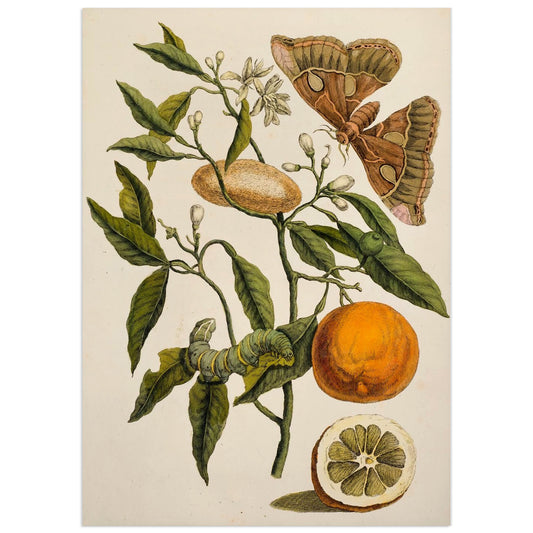
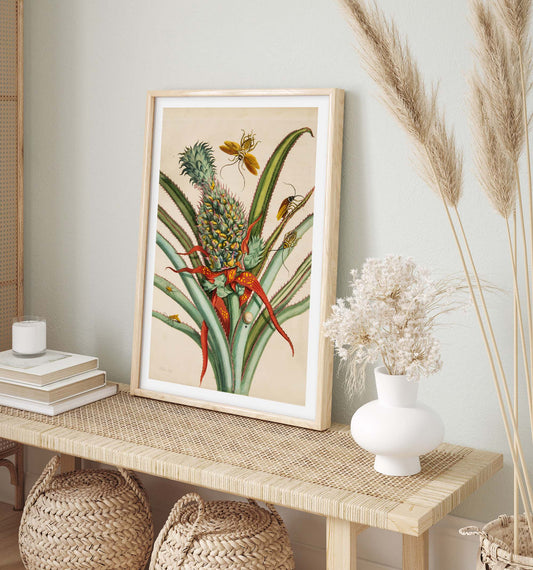
Maria Sibylla Merian (1647–1717) — German naturalist and artist who crossed the Atlantic alone in the 17th century to paint the plants and insects of Suriname. Her plates combine scientific precision with a beauty that has never aged.
Barbara Regina Dietzsch (1706–1783) — German watercolourist whose floral representations achieve an almost photographic precision, two centuries before the invention of photography.
Our best-selling botanical prints
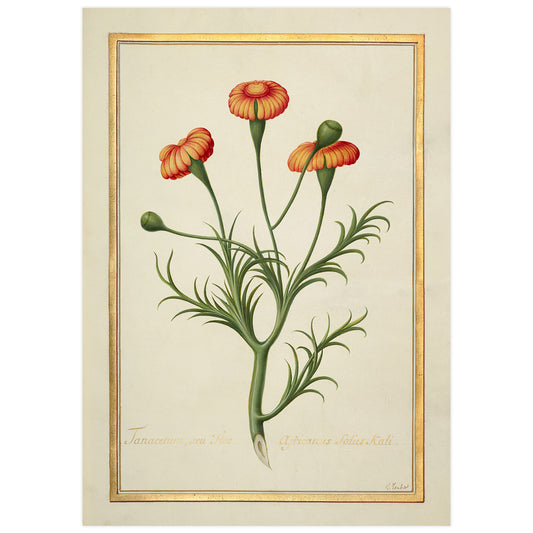
Tanacetum flower — Johann Walter
Chrysanthemums — Hasegawa Keika
Egyptian Lotus (Nymphaea Lotus)
Bouquet of Flowers with Insects — Pierre-Joseph Redouté
What are the main types of botanical illustration?
Botanical illustrations generally fall into two broad approaches. Scientific illustrations prioritise precision and accuracy — they are used to identify, classify and document plant species, relying on line drawings, Indian ink and rigorous watercolour technique. Artistic illustrations, by contrast, give the artist far greater freedom in terms of technique and interpretation. Most of the works in our collection sit at this crossroads between science and beauty — precise enough to be faithful, free enough to be extraordinary.
Where to buy botanical prints?
Original illustrations and antique reproductions can be found through specialist online shops, auction houses and flea markets. Some bookshops also carry beautiful first editions with full-page botanical plates.
At Wallango, we sell modern reproductions at excellent value — printed on 250 gsm archival paper in high definition. Every image is digitally restored by our team to ensure maximum faithfulness to the colours and details of the original work. Free worldwide shipping on orders over $100, returns accepted within 30 days.